WildC.A.T.s: The Animated Series
WildC.A.T.s Comes To Television
When WildC.A.T.s debuted as one of Image Comics’ first major superhero properties in 1992, the series was built around the visual style of Jim Lee and the mythology developed by Lee and Brandon Choi. Within only a few years, the property would move far beyond the comic book page. In 1994, the WildC.A.T.s became an animated television series, bringing the characters into Saturday morning programming and creating an entirely new collection of comics, books, toys, trading cards, home video releases, and other licensed merchandise.
The animated series, commonly known as WildC.A.T.s: Covert Action Teams, was produced by WildStorm Productions and Nelvana and developed for television by writer David Wise. CBS broadcast the series during the 1994-95 television season. Thirteen episodes were produced, with the first episode, “Dark Blade Falling,” airing on October 1, 1994, and the final episode, “The End Game, Part Two,” airing on January 21, 1995.
The television version was not simply a motion version of the comic book. The characters, relationships, mythology, and tone were adjusted for animation, creating a distinct interpretation of the WildC.A.T.s that could stand on its own.
From Comic Book To Saturday Morning
The road to animation began during the period when superhero cartoons were becoming increasingly important to television. The success of X-Men: The Animated Series helped demonstrate the potential of adapting comic book properties for television, and Jim Lee’s agency, Creative Artists Agency, encouraged Lee to consider bringing his characters to animation.
CAA arranged a meeting between Lee and Canadian animation studio Nelvana. During that meeting, Nelvana showed Lee its work on Cadillacs and Dinosaurs, helping convince him that the studio could translate the WildC.A.T.s into animation. Lee and Nelvana subsequently pitched the property to CBS, which placed the series into development.
That development process placed WildC.A.T.s in a very different environment from the comic book that had established the property. The television series needed a recognizable team, a clear central conflict, recurring villains, and stories that could be understood by a Saturday morning audience.
The result retained the basic conflict between the Kherubim and the Daemonites, but reshaped elements of the comic mythology for television.
Jim Lee And The Animated Series
Jim Lee’s involvement was an important part of the transition. He was not simply the creator whose name appeared on the opening credits. Lee was an executive producer, and the series represented one of the first major attempts to move the WildStorm characters into another medium.
The television version also demonstrates how much interpretation is involved when a comic book property moves into animation. Characters familiar from the comics could look different, behave differently, or occupy different positions within the story. Voodoo, for example, was presented as a considerably younger character than her comic-book counterpart, while Jacob Marlowe was reinterpreted for the animated setting.
The differences were not incidental. The animated WildC.A.T.s were being built for a new audience and a different storytelling format.
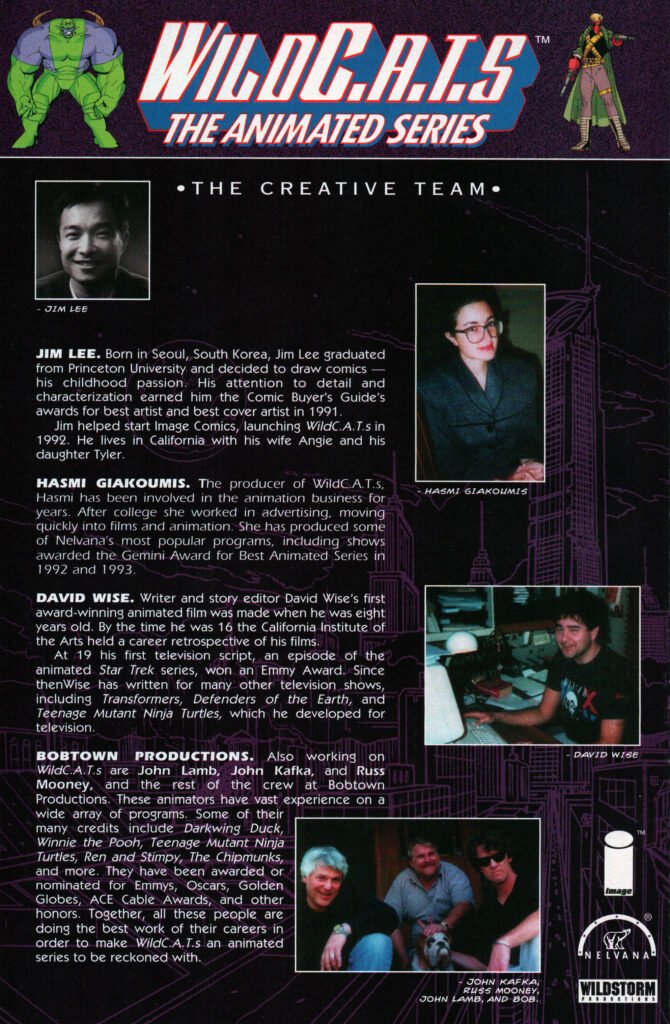
That process is discussed directly by Lee in an interview included with the 2005 WildC.A.T.s DVD release. The Collector’s Edition included all thirteen episodes along with a roughly 25-minute Jim Lee interview, as well as additional material including a Jim Lee profile, character profiles, battle clips, a mission photo album, trivia material, and the pilot script for “Dark Blade Falling.”
Bringing WildC.A.T.s To Animation
The television production brought together WildStorm and Nelvana personnel with a large animation staff. The series was executive produced by Patrick Loubert, Michael Hirsh, and Jim Lee, with Toper Taylor serving as co-executive producer. Hasmi Giakoumis was the producer, while Bob Smith served as supervising director.
David Wise, who had developed the series for television, was also one of the story editors alongside Bob Forward. Wise’s involvement helped establish the structure of the animated series and its adaptation of the WildC.A.T.s mythology.
The voice cast gave the characters their animated identities. Rod Wilson provided the voice of Spartan and also appeared as Mr. Majestic, while Roscoe Handford played Zealot, Colin O’Meara played Grifter, Ruth Marshall played Voodoo, Dean McDermott played Warblade, Paul Mota played Maul, Sean McCann played Jacob Marlowe, Janet-Laine Green played Void, and Maurice Dean Wint provided the voice of Helspont.
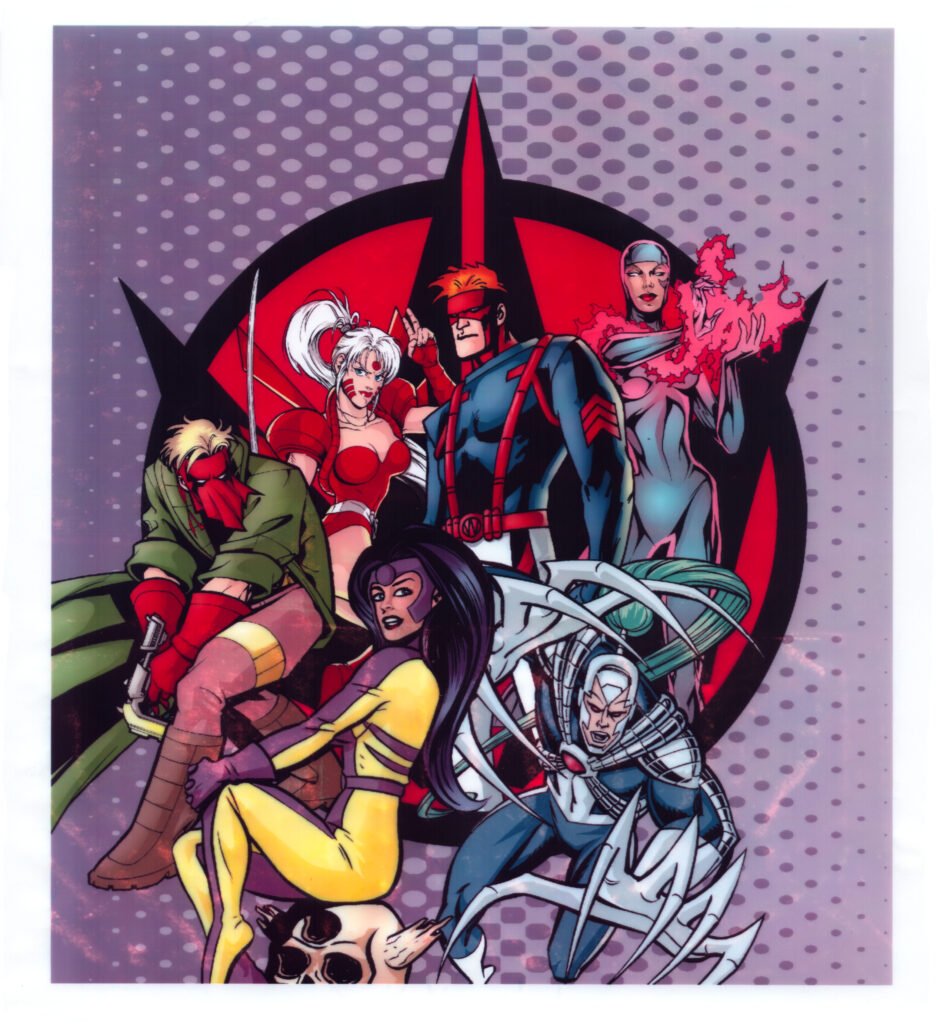
The animated team centered on Spartan, Grifter, Zealot, Voodoo, Warblade, Maul, and Void, with Jacob Marlowe serving as the team’s organizer. Helspont provided the primary opposing force, while the Daemonites, Troika, Coda, and other organizations and characters populated the expanding animated universe.
The production also generated a substantial amount of artwork and animation material. The visual identity of the series was carried into the characters, vehicles, locations, and environments that would later appear in licensed products and printed adaptations.
The Animated WildC.A.T.s
The first episode established the animated version of the team and its central conflict. “Dark Blade Falling” introduced viewers to the WildC.A.T.s and their struggle against the Daemonites, while also establishing the team’s relationships and individual abilities.
From there, the series moved through a mixture of character-driven stories and larger conflicts. “Heart of Steel” followed the team into another confrontation, while “Cry of the Coda” expanded the show’s mythology. “The Evil Within” and “The Big Takedown” continued to develop the characters and the threats surrounding them.
The second half of the series increasingly pushed toward the larger conflict with Helspont. “Lives in the Balance,” “Soul of a Giant,” “Betrayed,” and “Black Razor’s Edge” continued the story while introducing or expanding characters such as Max Cash and the Black Razors.
The final three episodes formed a larger storyline. “And Then There Were None” was followed by “M.V.P.” and then the two-part “The End Game,” which brought the first season to its conclusion.
The complete thirteen-episode run aired from September 17, 1994 through January 21, 1995. The episode schedule was not completely uninterrupted, with several Saturday mornings between episodes, but the original episode run remained concentrated within the 1994-95 television season.
WildC.A.T.s Enters The Action Zone
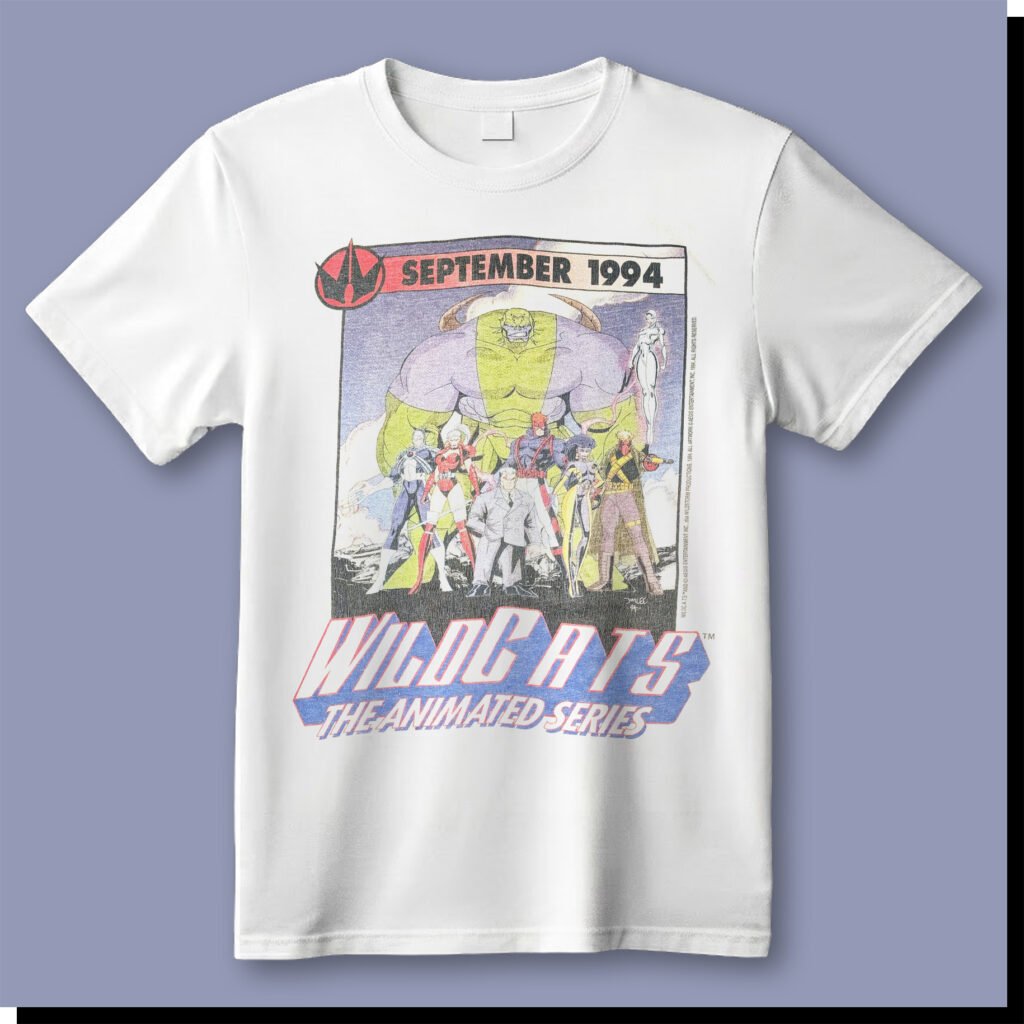
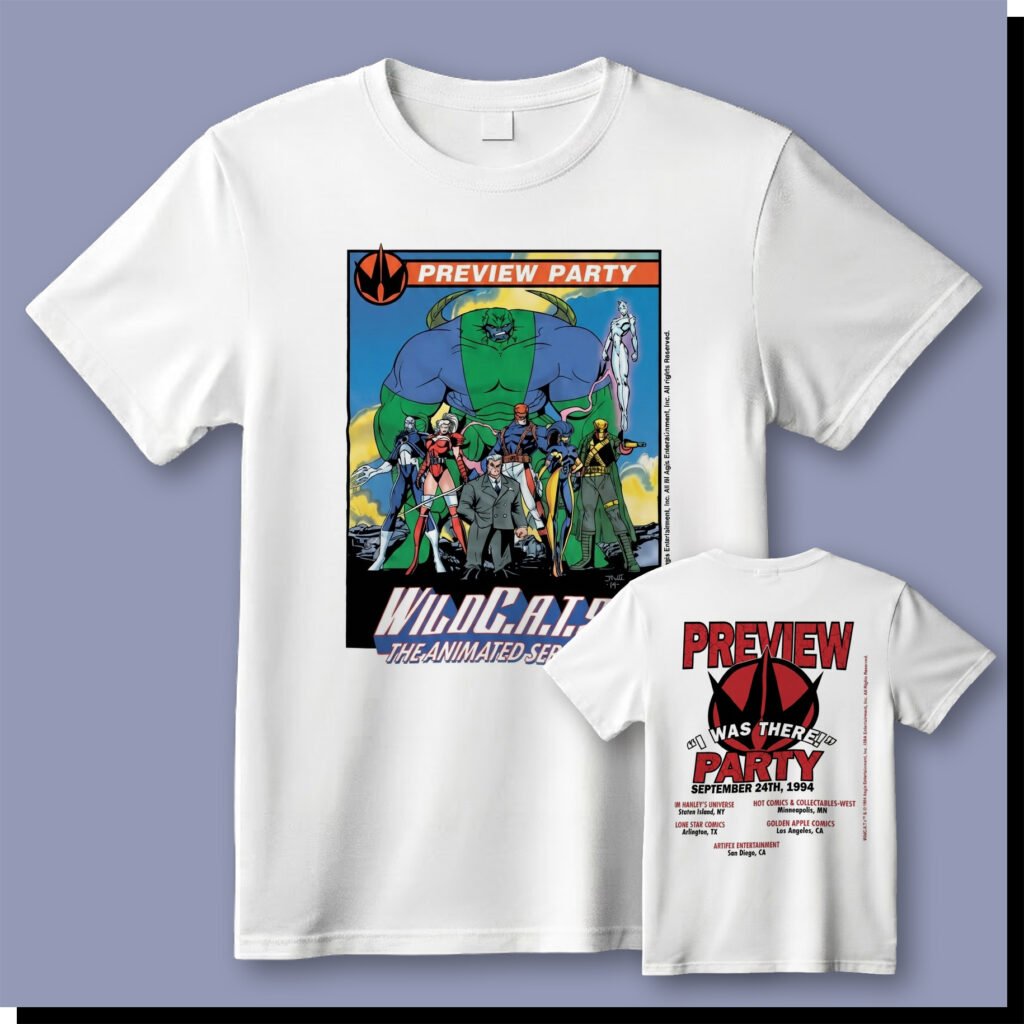
WildC.A.T.s was also part of CBS’s larger attempt to build an action-oriented Saturday morning programming identity. The series was grouped with other animated action properties under the Action Zone banner, alongside Teenage Mutant Ninja Turtles and Skeleton Warriors.
This placed WildC.A.T.s in a broader television context than the individual series itself. The characters were being presented not simply as an Image Comics adaptation, but as part of a larger block of animated action programming.
CBS ultimately announced in 1995 that the series would not receive a second season. The thirteen produced episodes therefore became the complete original series.
The Animated Series Appears In The Comic
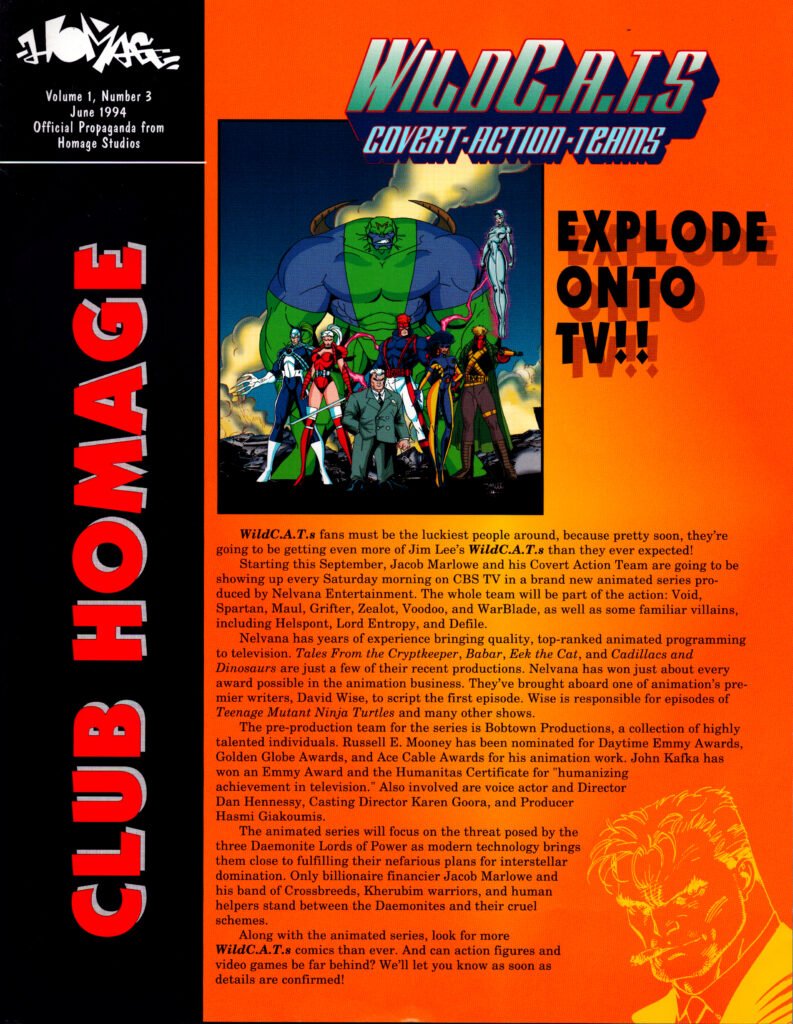
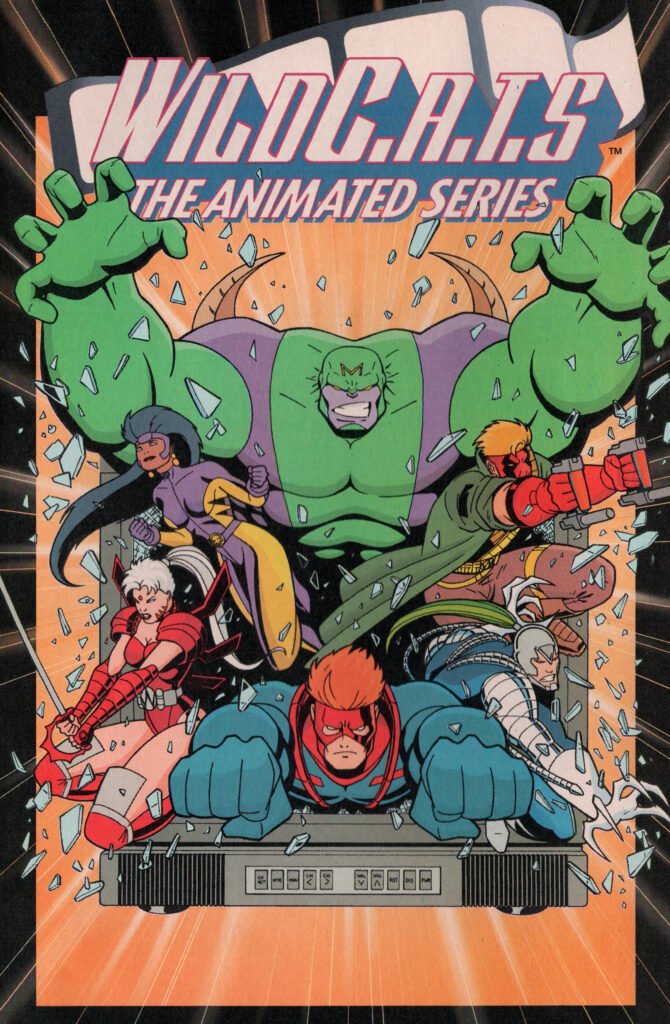
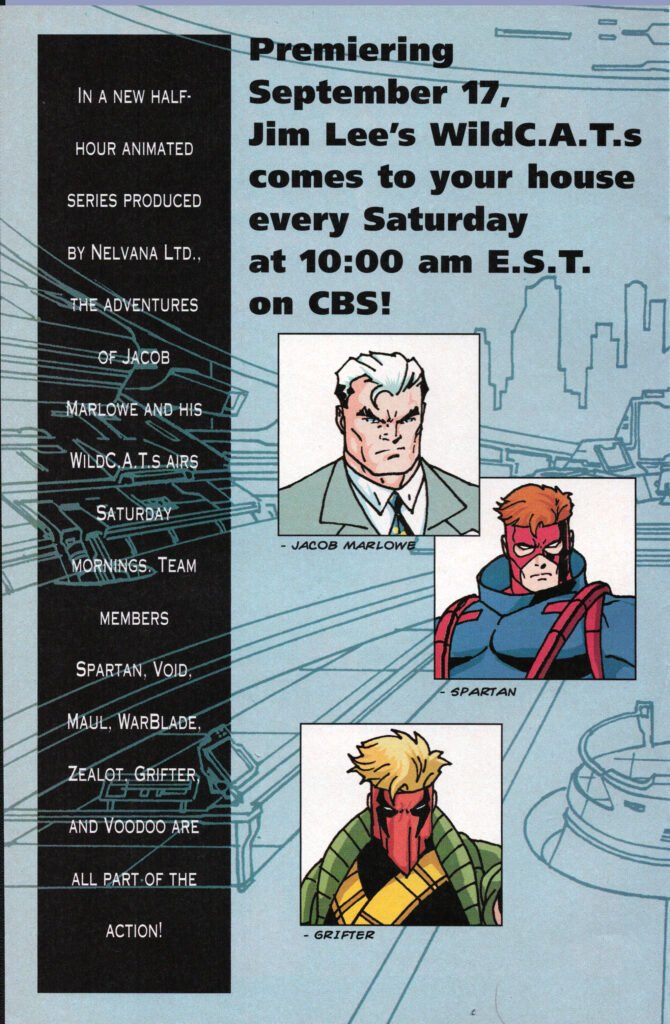
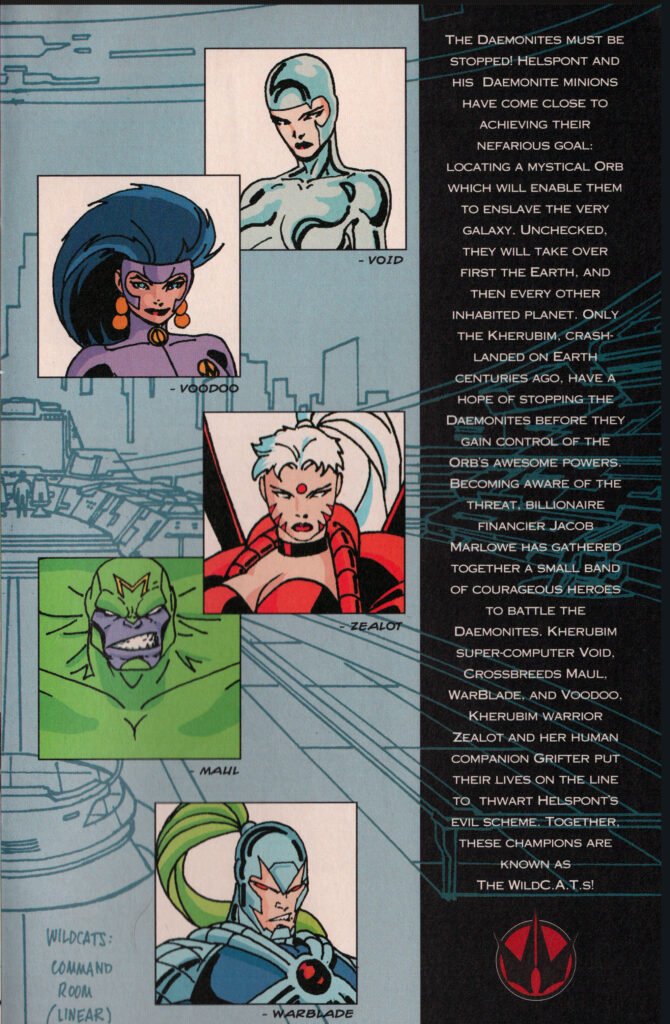
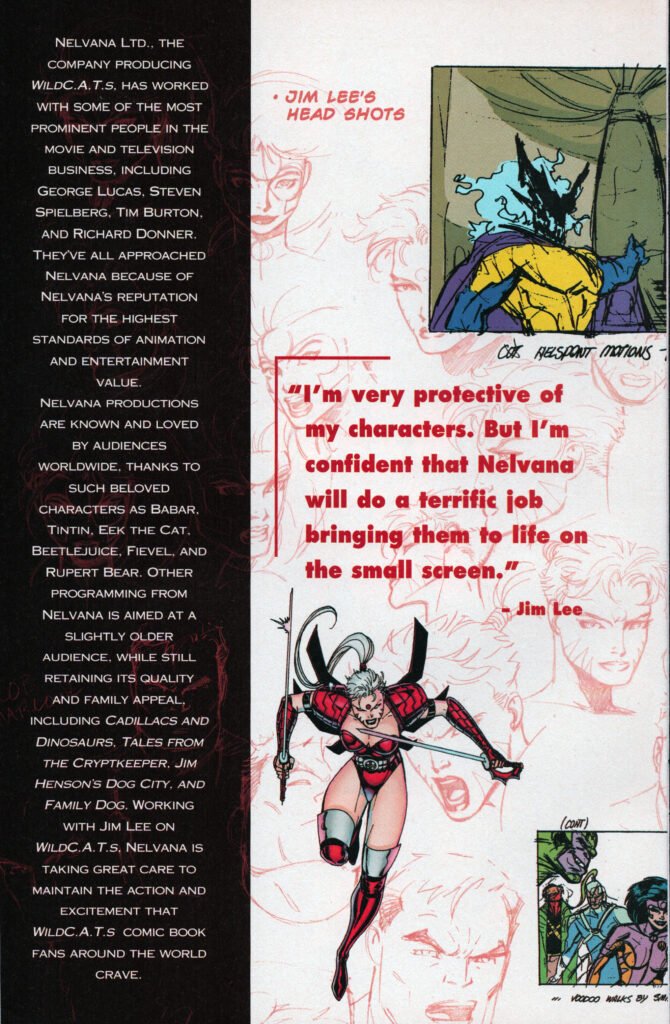
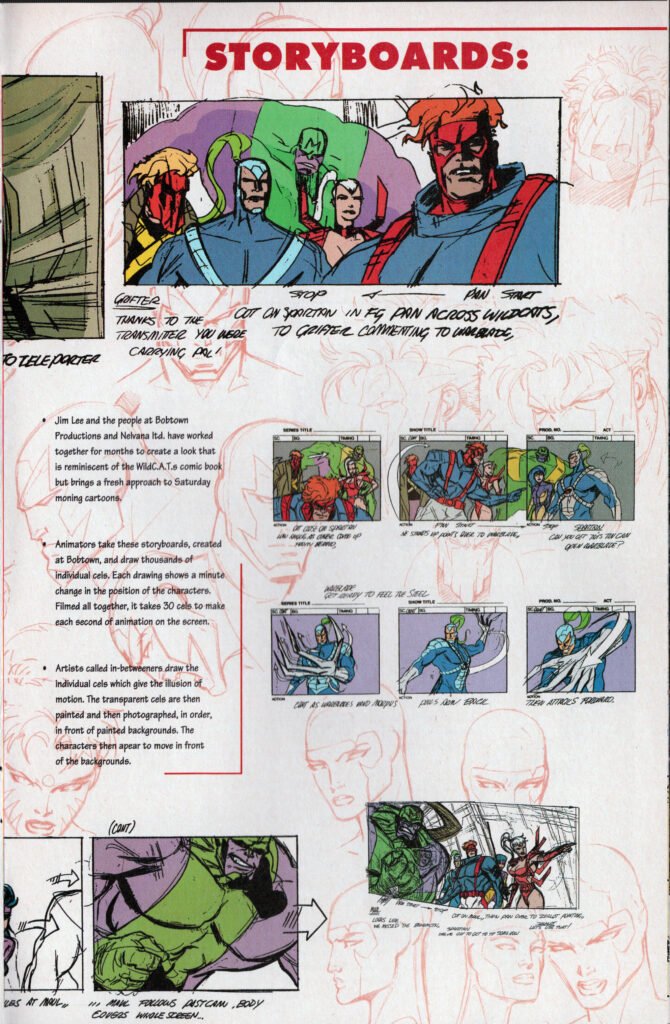
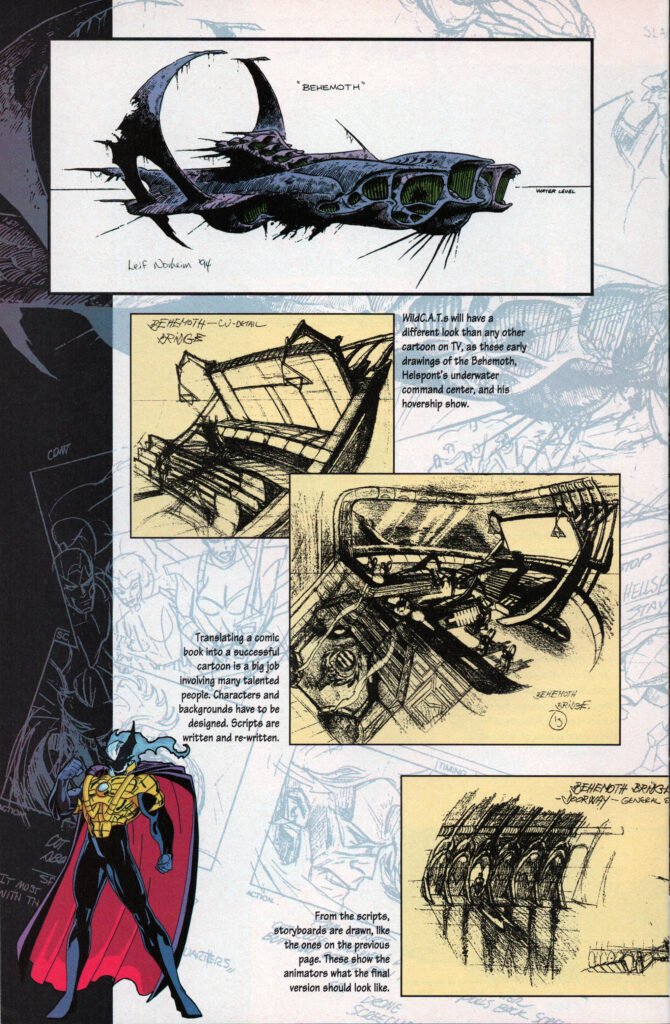
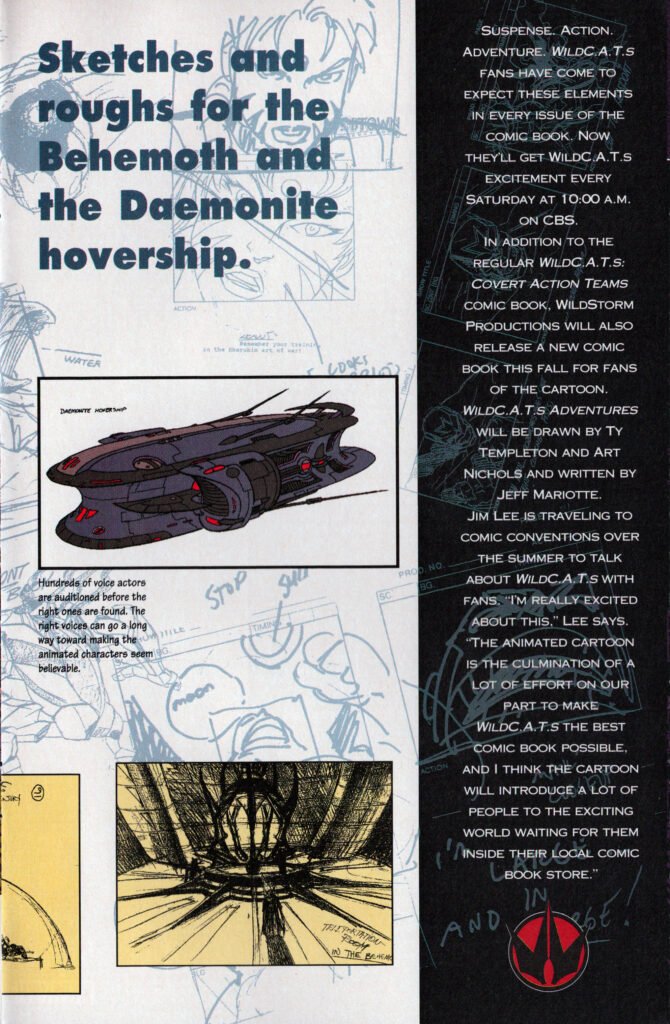
Before the cartoon premiered, the animated version was promoted directly inside the comic book that had created the property.
WildC.A.T.s #12, WetWorks #1, and other books published in the Summer of 1994 contained an eight-page preview of the upcoming animated series. The issue therefore occupies an interesting position in the history of the property. The original comic was still telling its own story while simultaneously introducing readers to a television interpretation of the characters.
The preview appeared only weeks before the television premiere, making the comic itself part of the transition from WildC.A.T.s as a comic-book property to WildC.A.T.s as a multimedia property.
WildC.A.T.s Adventures
The animated series quickly returned to comic books in a new form.
WildC.A.T.s Adventures began publication from Image in September 1994, the same month as the television series’ premiere period. The series ran for ten issues through June 1995.
Rather than continuing the regular WildC.A.T.s comic-book continuity, Adventures adapted the television series into comic-book form. The first issue adapted “Dark Blade Falling,” with a screenplay credited to David Wise and an adaptation by Jeff Mariotte. Ty Templeton provided the pencils and Art Nichols the inks.
The series continued to follow the animated episodes. By issue #9, the comic was adapting “Black Razor’s Edge,” and issue #10 adapted “And Then There Were None.”
The result was an unusual loop in the history of the property: a comic book created an animated series, and that animated series was then adapted back into a comic book.
In January 1995, Image published the 36-page WildC.A.T.s Adventures Sourcebook. Rather than functioning simply as another comic adaptation, the Sourcebook documented the animated setting through character and organization profiles, equipment and vehicle material, and an episode guide.
The Stories Become Novels
The animated WildC.A.T.s also moved into children’s paperback fiction.
Scott Ciencin wrote two WildC.A.T.s novels for Random House’s Bullseye Books line in 1995: Dark Blade Falling and Evil Within. Dark Blade Falling was released March 28, 1995 as an 80-page paperback with ISBN 9780679874805.
Evil Within was also released March 28, 1995, with ISBN 9780679874812. The novel adapts the television episode of the same name.
By this point, the animated WildC.A.T.s had moved well beyond television. The same characters were appearing in comics, reference material, prose fiction, and licensed merchandise at the same time.
WildC.A.T.s Comes Home On VHS
Home video provided another way for the animated series to reach viewers outside its Saturday morning broadcast.
Sony Wonder released the series on VHS beginning with Dark Blade Falling / Heart Of Steel, catalog number LV 49611, in 1994. The tape contained the first two episodes and ran approximately 46 minutes. A second release, LV 49612, followed in 1995 with “Cry Of The Coda” and “The Evil Within.”
Additional tapes followed, including The Big Takedown / Lives In The Balance and The Endgame, completing the home-video releases of the series. The final tape, LV 49849, was released in 1996.
The first VHS release is also represented by a promotional copy, adding another piece to the story of how the series was distributed and marketed.
The Complete Series On DVD
A decade after the original television run, the complete series returned in a single home-video release.
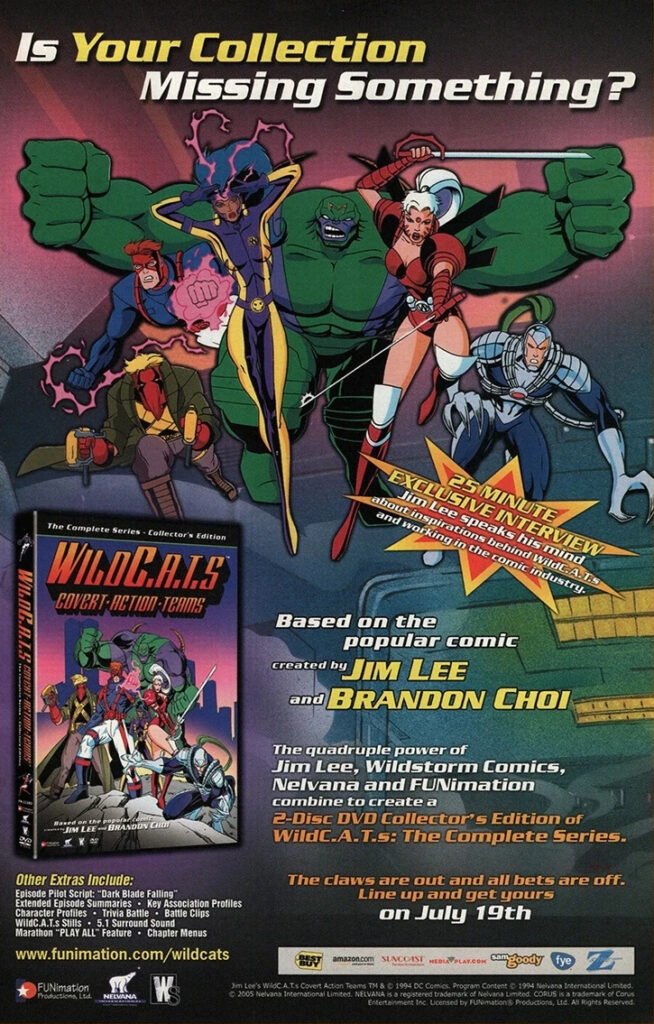
Funimation released Jim Lee’s WildC.A.T.S: Covert Action Teams on DVD on July 19, 2005. Unlike the original VHS releases, which divided the episodes across multiple tapes, the DVD collected all thirteen episodes together.
The release also added material that had not been part of the original broadcasts. Most notably, it included the Jim Lee interview, along with a Jim Lee profile, character profiles, battle clips, a mission photo album, trivia material, and the pilot script for “Dark Blade Falling.”
The DVD therefore became more than a reissue of the television episodes. It provided additional context about the creation of the animated series and Lee’s involvement with the production.
WildC.A.T.s Becomes A Toy Line
The animated series also gave Playmates an opportunity to turn the characters into action figures.
The main toy line appeared in 1994 and 1995 and included six-inch figures based on characters such as Spartan, Grifter, Zealot, Warblade, Maul, Voodoo, Void, Helspont, Pike, and a generic Daemonite. Several characters received alternate costumes or versions, while figures such as Mr. Majestic, Max Cash as Black Razor, and Slag expanded the line beyond the core television team.
The toy program extended the animated WildC.A.T.s into the same retail environment occupied by other major Saturday morning action properties of the period. Larger ten-inch figures of Spartan, Grifter, and Maul were also produced, along with the Bullet Bike.
The toys are therefore part of the same short period in which WildC.A.T.s moved from comic books into a much broader consumer property.
Trading Cards
Trading cards provided another direct connection between the animated series and WildStorm collecting.
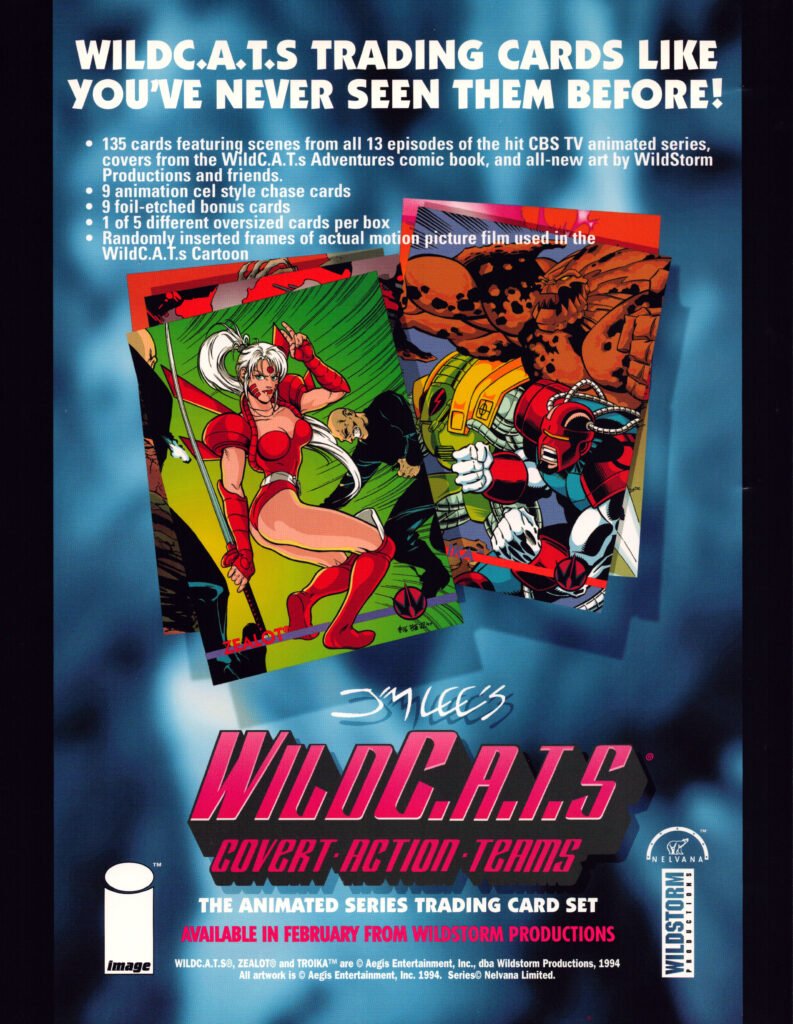
The 1995 WildC.A.T.s Animated trading-card set contained a 135-card base set along with several different chase and specialty subsets. The base cards covered the characters and episodes, while the set also included chase cards and a FRAME card featuring original Nelvana animation material.
The complete checklist and detailed card information are documented separately here.
Other Merchandise
The animated series appeared during a period when WildC.A.T.s merchandise was expanding rapidly. WildC.A.T.s Slammer Whammers POGs were produced during the same 1994-95 period, alongside other licensed products. The merchandise included products associated with Jim Lee’s WildC.A.T.s as well as items that drew upon the broader popularity of the property.
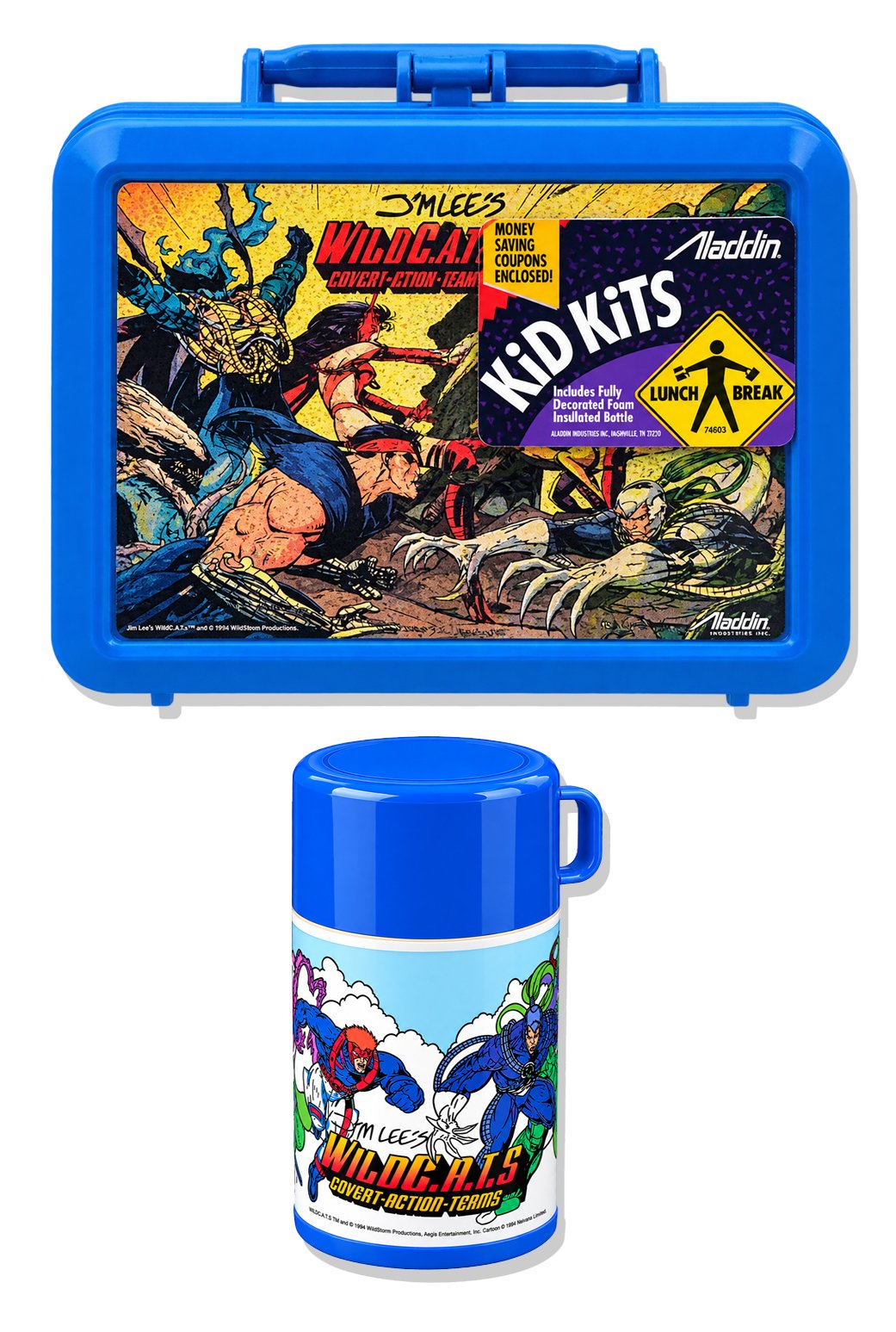
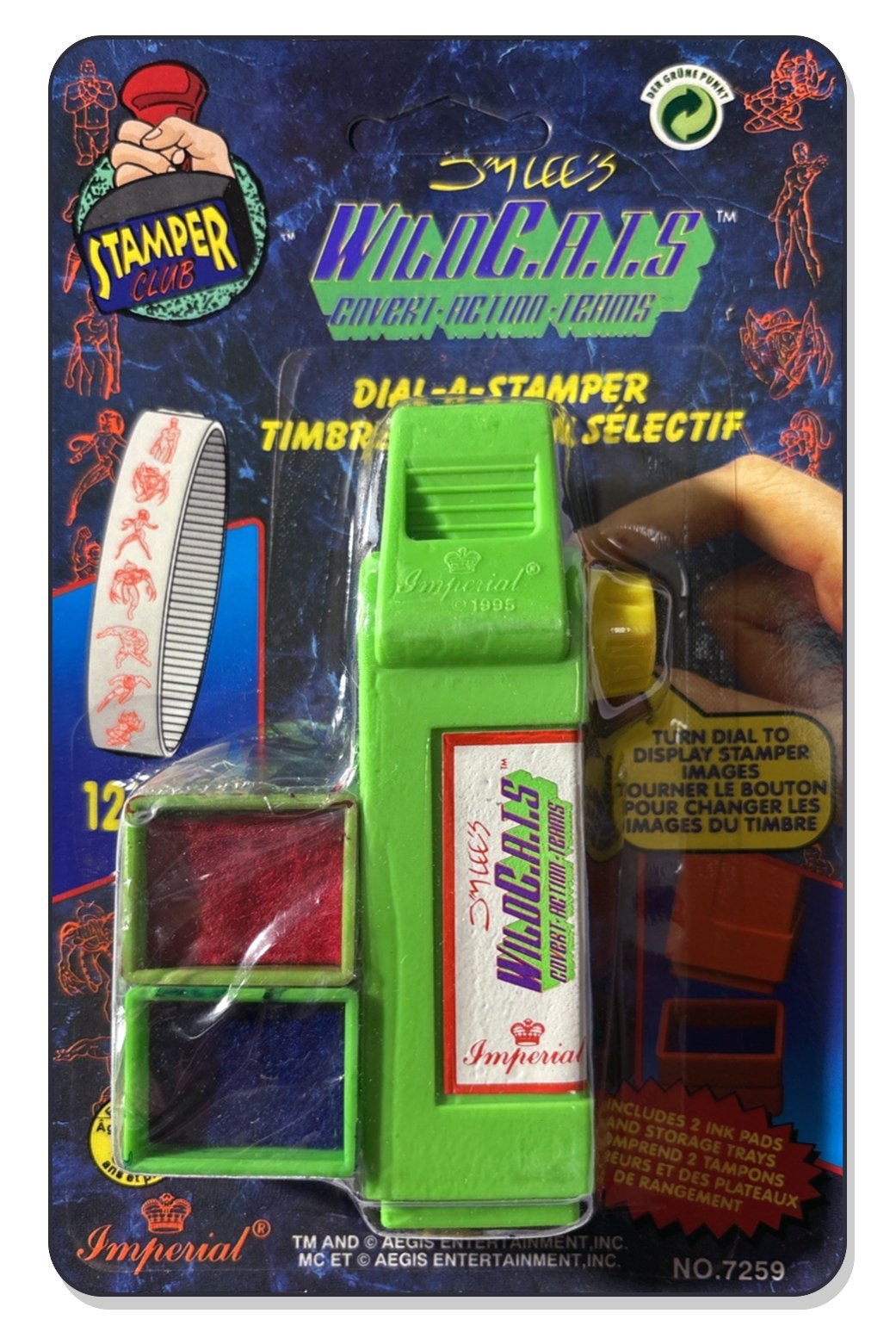
Other licensed merchandise from the period included items such as the 1994 Aladdin WildC.A.T.s lunchbox and thermos, and a Dial-A-Stamper by Imperial. A signed and numbered mini WildC.A.T.s Iris Print was also created.
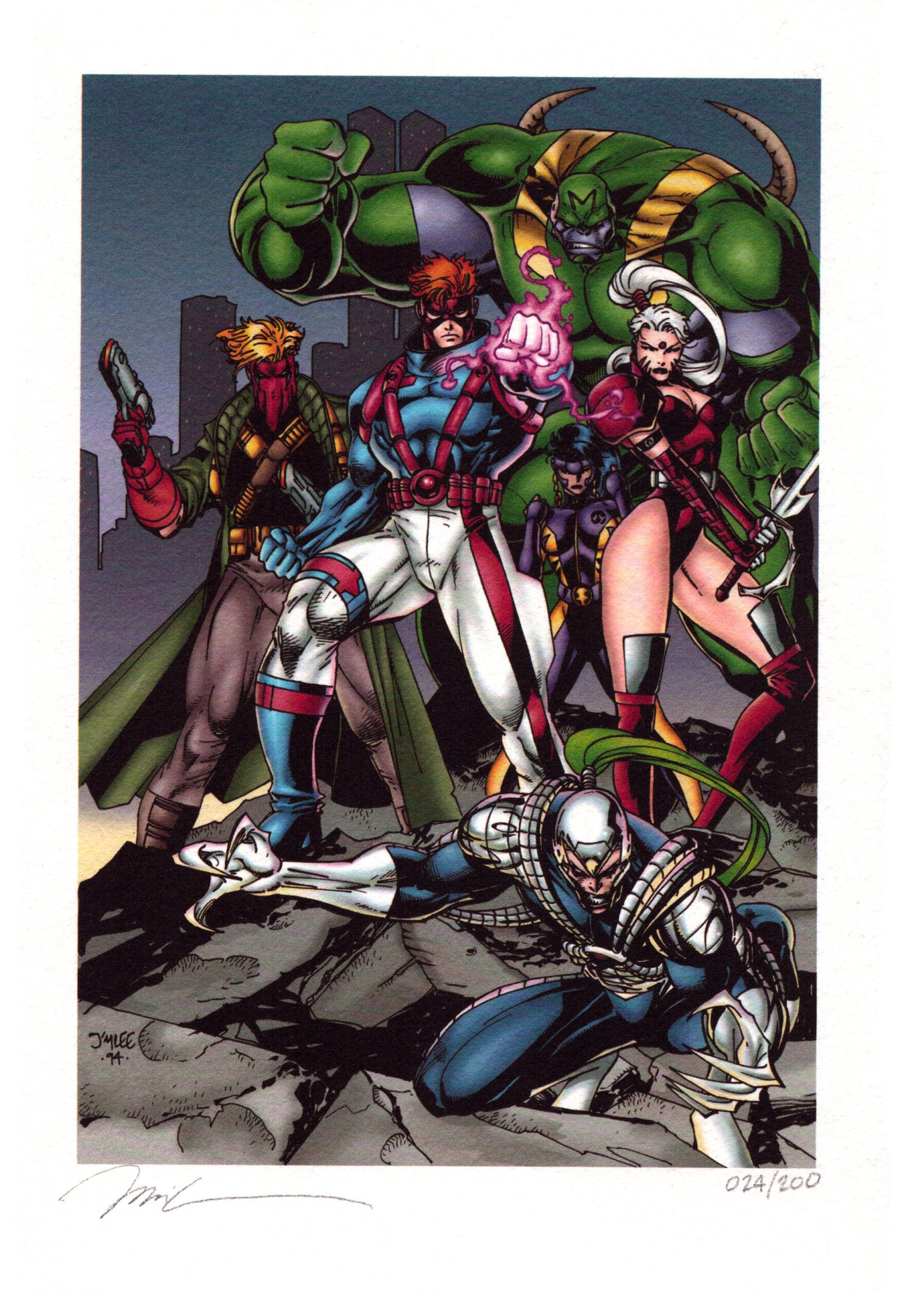 | 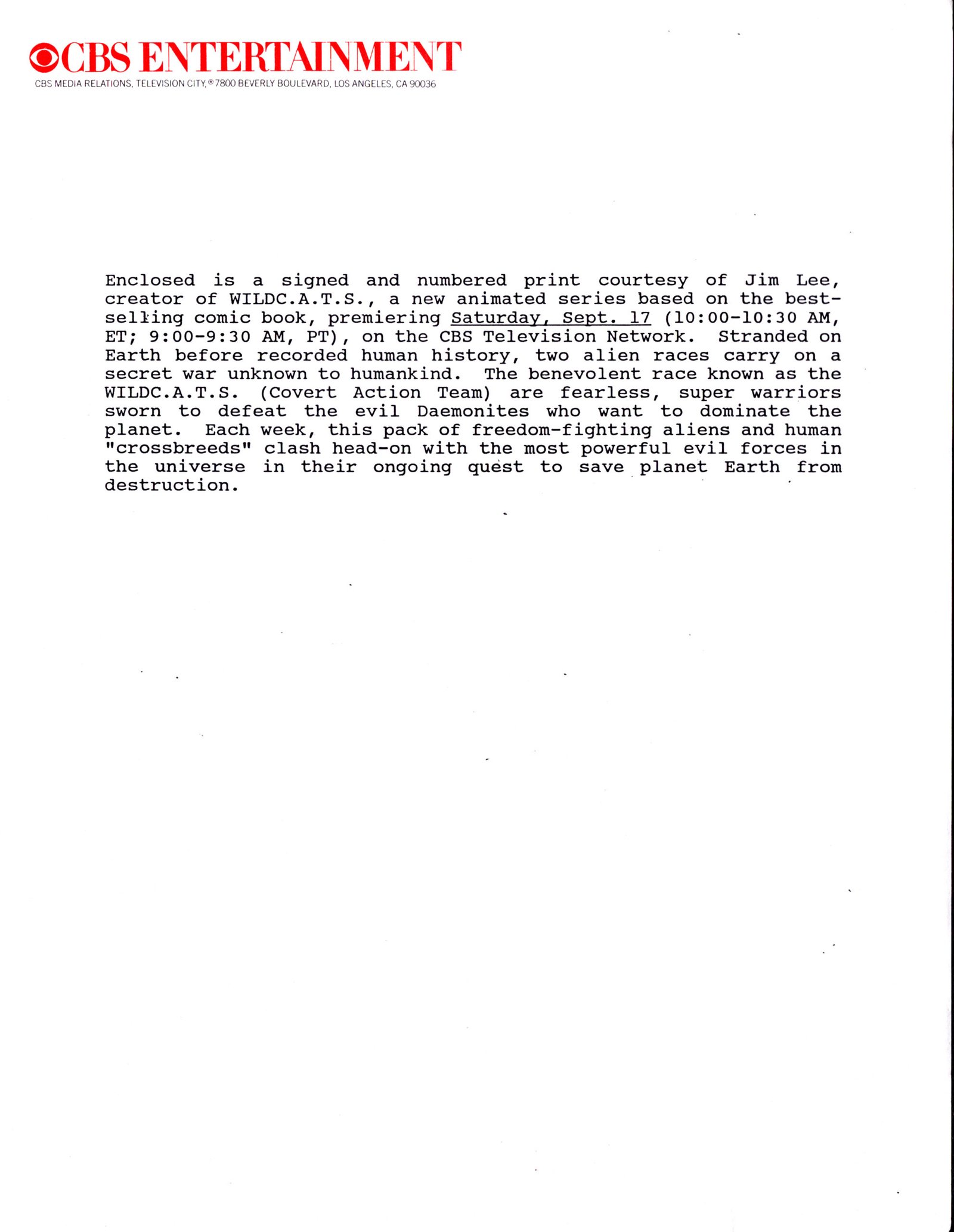 |  |
| Signed WildC.A.T.s Mini IRIS Print | CBS Entertainment Letter | CBS Envelope |
The WildC.A.T.s Video Game
The expansion continued into video games.
In November 1995, Playmates Interactive and Australian developer Beam Software released WildC.A.T.s for the Super Nintendo Entertainment System. The game was a side-scrolling beat-’em-up featuring Spartan, Maul, and Warblade as playable characters. The game was licensed by Aegis Entertainment and Nelvana.
A Genesis version was reportedly planned but was never released.
The SNES game arrived after the television series had already ended its original run, making it one of the last major products associated with the animated-era expansion of WildC.A.T.s.
The End Of The Animated Series
The animated WildC.A.T.s existed for a relatively short period, but the amount of material produced around the series was substantial. The television run consisted of only thirteen episodes, ending with “The End Game, Part Two” on January 21, 1995.
The cancellation did not immediately stop the appearance of the characters in other media. WildC.A.T.s Adventures continued through June 1995, the VHS releases continued into 1996, and the SNES game appeared later in 1995. The television series therefore ended before the broader wave of WildC.A.T.s merchandise and adaptations had completely disappeared.
What had begun as an attempt to bring a comic-book team to Saturday morning television had become a much larger multimedia expansion.
WildC.A.T.s On Television
The animated WildC.A.T.s occupies a distinctive place in the early history of WildStorm Productions.
The original comic had introduced the characters and mythology. The television series then reinterpreted those characters for a new audience and gave them a visual identity outside the comic books. That version of the property immediately generated additional comics, a sourcebook, novels, VHS releases, toys, trading cards, POGs, and a video game.
The thirteen-episode television series was therefore only one part of a much larger period in WildC.A.T.s history.
For a brief period in 1994 and 1995, the WildC.A.T.s were everywhere. The characters were appearing on Saturday morning television, on comic-book racks, in toy aisles, in trading-card packs, in children’s books, on VHS tapes, and in other licensed products. The animated series may have lasted only thirteen episodes, but its arrival transformed WildC.A.T.s from a successful comic-book property into a multimedia franchise.
Series Credits
Series: WildC.A.T.s: Covert Action Teams
Based on: WildC.A.T.s by Jim Lee and Brandon Choi
Developed for Television by: David Wise
Production: WildStorm Productions / Nelvana Limited
Network: CBS
Original Run: September 17, 1994 – January 21, 1995
Episodes: 13
Executive Producers: Patrick Loubert, Michael Hirsh, Jim Lee
Co-Executive Producer: Toper Taylor
Producer: Hasmi Giakoumis
Supervising Director: Bob Smith
Story Editors: Bob Forward, David Wise
Voice Director: Dan Hennessey
Theme: “Wild C.A.T.s” by Sheree Jeacocke and Gerry Mosby
Music: Ray Parker and Tom Szczesniak
Principal Voice Cast
Rod Wilson: Hadrian-7 / Spartan, Mr. Majestic
Roscoe Handford: Lady Zannah / Zealot
Colin O’Meara: Cole Cash / Grifter
Ruth Marshall: Priscilla Kitaen / Voodoo
Dean McDermott: Reno Bryce / Warblade
Paul Mota: Jeremy Stone / Maul
Sean McCann: Jacob Marlowe
Janet-Laine Green: Void, Karyn McKee
Maurice Dean Wint: Helspont
Colin Fox: Pike, Archer Armament
Dave Nichols: Attica
Addison Bell: Slag
Dan Hennessey: H.A.R.M.
Denis Akiyama: Dockwell
Elizabeth Hanna: Artemis
Kristina Nicholl: Providence
Lorne Kennedy: Karillion
Jim Millington: Zachary Forbes
Bob Zidel: Professor Stone
David Hemblen: Commander
Within a period of roughly two years, WildC.A.T.s moved through several distinct forms. It began as a comic book. It became an animated television series. That series became a comic-book adaptation, a sourcebook, children’s novels, home-video releases, toys, trading cards, POGs, and a video game.
The animated WildC.A.T.s was a relatively short-lived television series, but it left behind an unusually broad record of the moment when WildStorm’s characters first became a multimedia property.