Studio Secrets: How WildStorm Comics Were Made
Behind The Printed Page
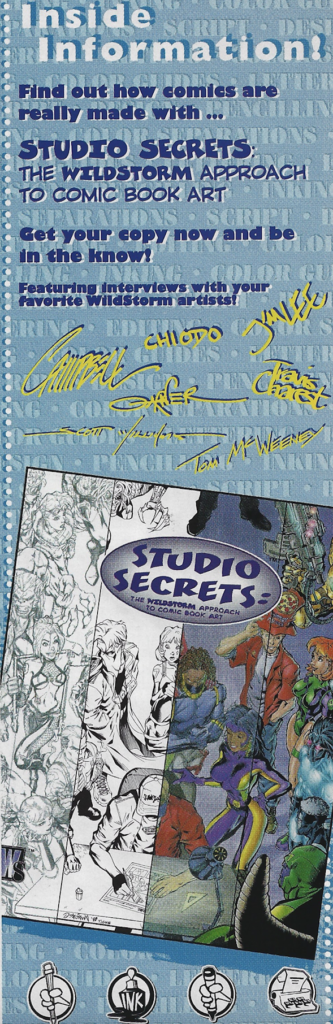
In 1998, WildStorm Productions solicited a book called Studio Secrets: The WildStorm Approach To Comic Book Art, intended to give readers a look behind the scenes of comic-book production. The project was unfortunately never completed or published. And while we can never really recreate its intended contents, the premise provides an interesting starting point for exploring how WildStorm’s comics were made.
A finished comic represented the combined work of writers, artists, editors, colorists, letterers, and production personnel. Each contributed different skills, but their work was connected by a shared goal: turning a story into a finished publication.
Editorial played an important role in that process. Editors worked with the creative teams to develop stories, review pages, coordinate revisions, and keep the work moving toward publication. The individual production stages were distinct, but they were not isolated from one another. Decisions made early in the process could affect the work that followed, and changes could require coordination across multiple departments.
The late 1990s also brought significant changes in the tools used to produce comics. Traditional artwork and hand-colored guides remained part of the process, while computer coloring, digital lettering, and electronic prepress methods were becoming increasingly important.
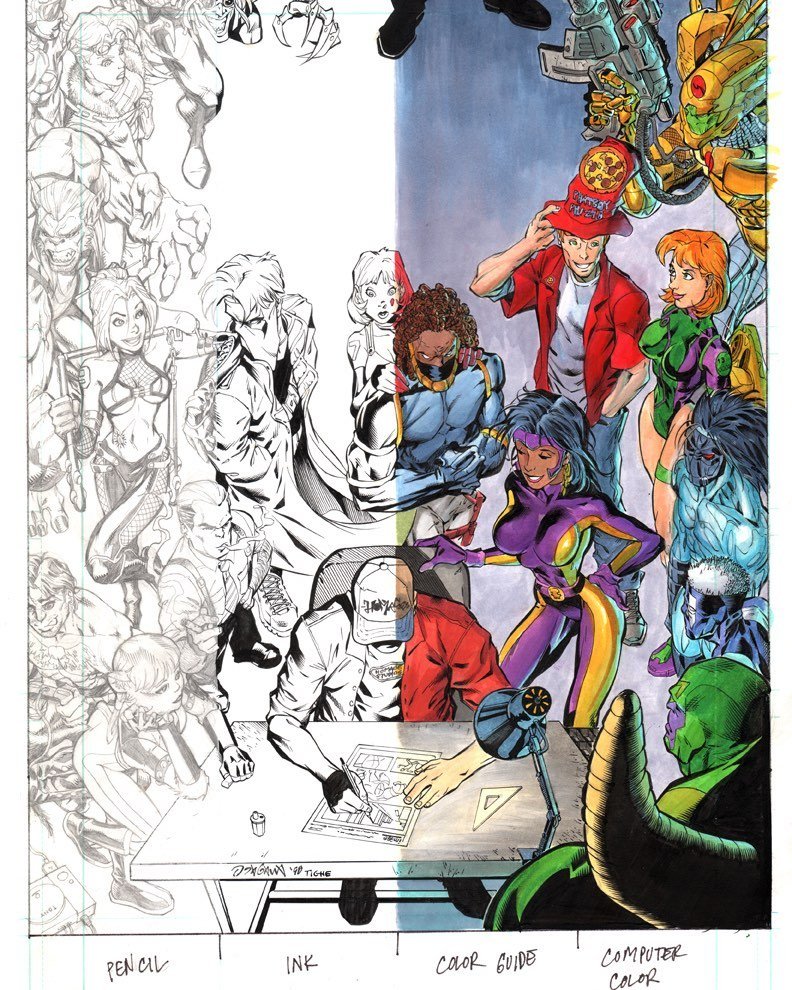
A cover was commissioned for the solicitation of the book. Ryan Odagawa had the distinct honor of providing the pencils and layout for the cover, with inks by John Tighe. The cover was a clever play on the comic book creation process with each quarter of the cover representing a different stage of production: pencils, inks, hand color guide, and digital colors.
The following sections trace the typical progression from story development to printing. Actual workflows could vary, and some stages overlapped or took place in a different order. The sequence provides a useful way to understand how the different parts of the process came together.
The Script: Developing The Story
The process began with the story, but the way it was developed could vary from one creative team to another.
In a full-script approach, the writer provided the dialogue, captions, panel descriptions, and other instructions before the penciller began drawing. The script established the events and structure of the story, giving the artist a framework for translating the written material into visual storytelling.
Another approach, commonly associated with the Marvel method, divided those responsibilities differently. The writer first developed a plot or outline, leaving the penciller to establish much of the pacing, panel layouts, and action. The writer then returned to add dialogue and captions after the pages had been drawn.
Both approaches required collaboration between the writer and artist, but they differed in when the visual storytelling and dialogue were established.
WildStorm appears to have relied primarily on full scripts, although individual creative teams could work differently. Whatever the approach, the editor helped keep the story aligned with the needs of the book, working with the writer and other members of the creative team as the material developed.
The script was therefore more than a set of instructions. It provided the foundation for the pages that followed, while editorial helped coordinate the creative decisions that shaped the finished story.
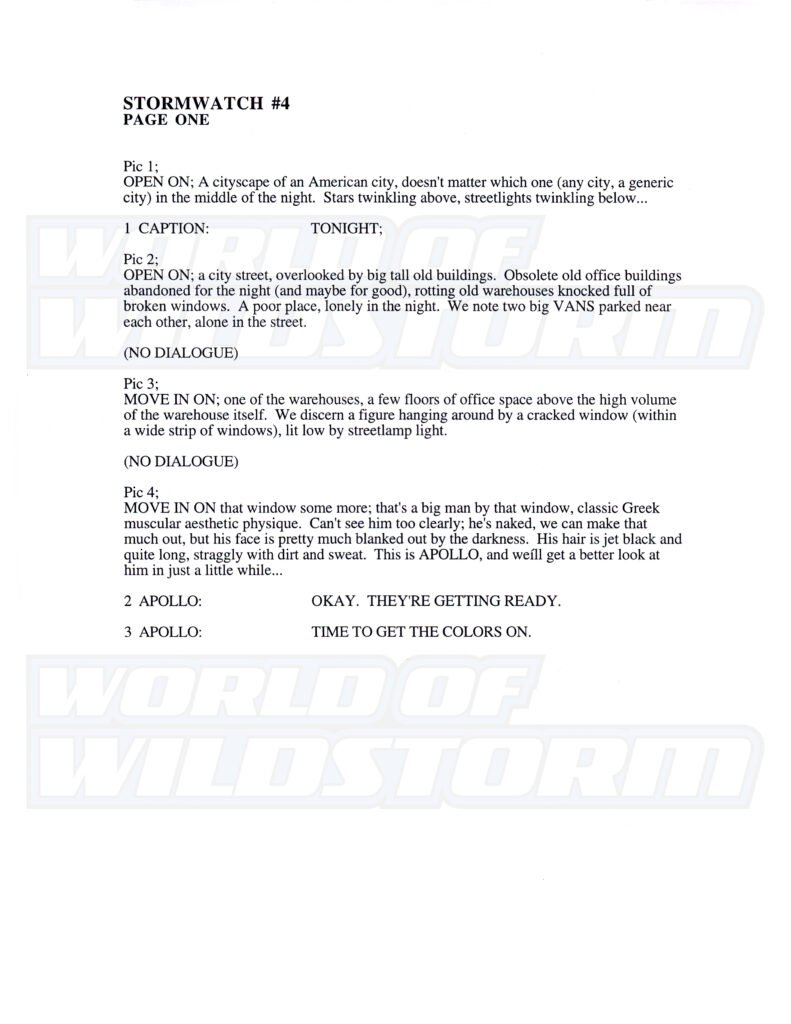
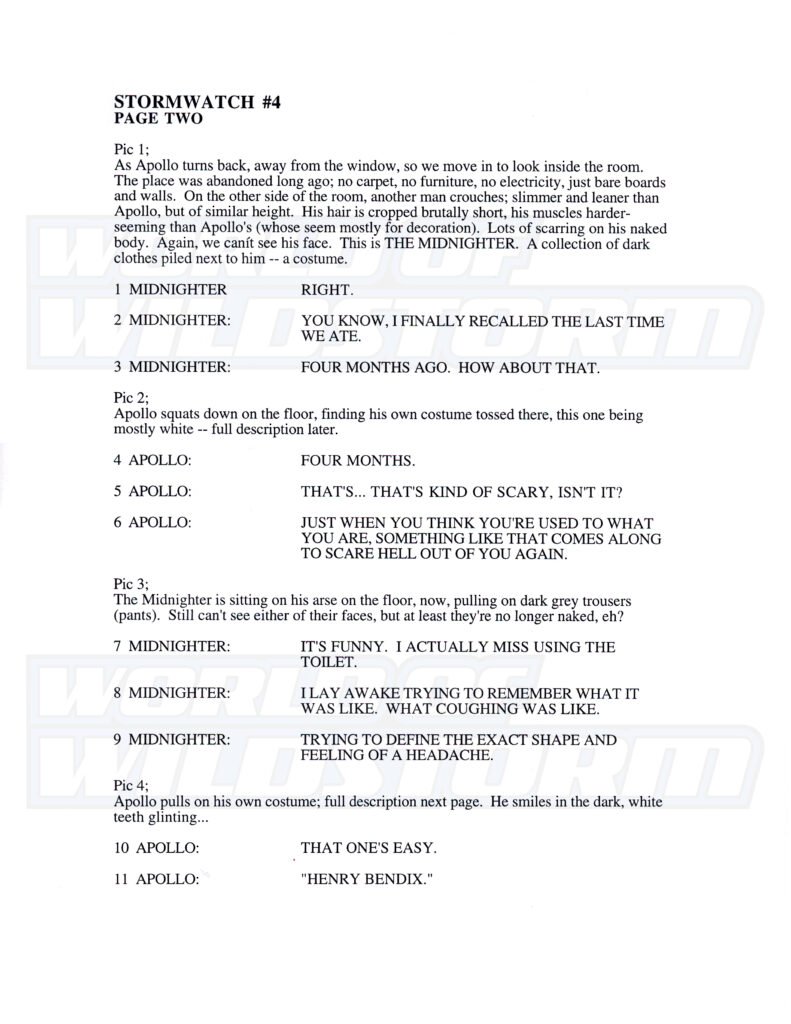
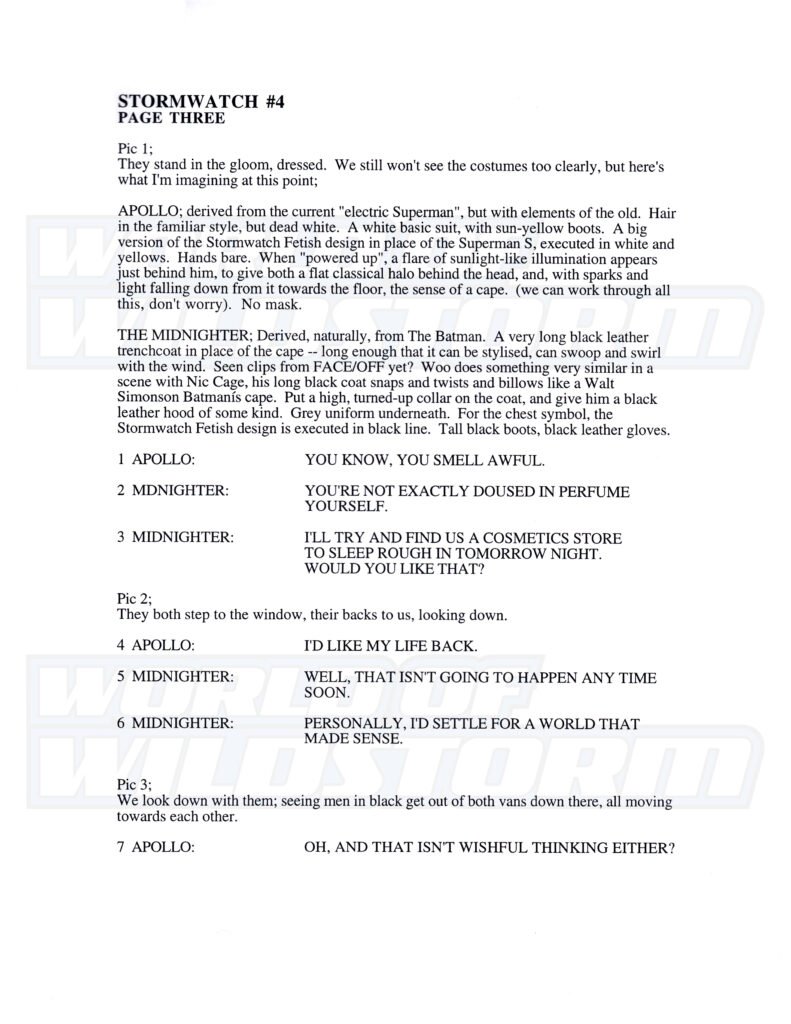
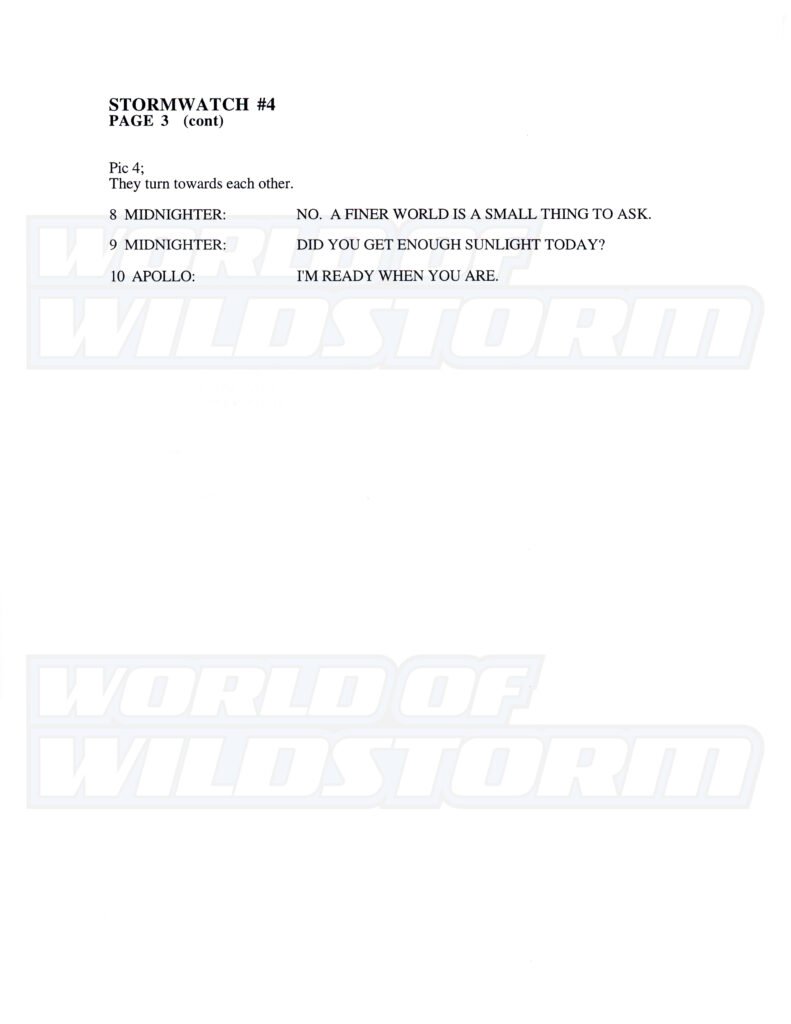
The examples below are from StormWatch (Vol. 2) #4 by Warren Ellis. These opening pages introduce readers to Midnighter and Apollo for the very first time. Note how each page roughly represents a page in the comic, and how the script is formatted to support the rest of the comic book team.
Pencils: Translating The Story Into Pictures
With the story established, the penciller began turning the script into artwork. This involved more than drawing the characters and locations described on the page. The artist also determined how readers would experience the story.
Panel layouts, perspective, character placement, facial expressions, and composition all contributed to the pacing. A large panel could emphasize a dramatic reveal, while a sequence of smaller panels could convey rapid action or draw attention to a character’s reaction.
These decisions were particularly important in the action-oriented comics for which WildStorm became known. Detailed artwork and elaborate compositions required careful consideration of how each panel related to the others and how the page would guide the reader’s eye.
The penciller’s work also involved interpreting the script. Even when a writer supplied detailed panel descriptions, the artist had to determine how those instructions would translate into effective visual storytelling.
Editorial review helped keep the pages consistent with the story and the needs of the issue. Questions about clarity, pacing, or continuity could be addressed as the artwork developed, rather than being treated as concerns entirely separate from the creative process.
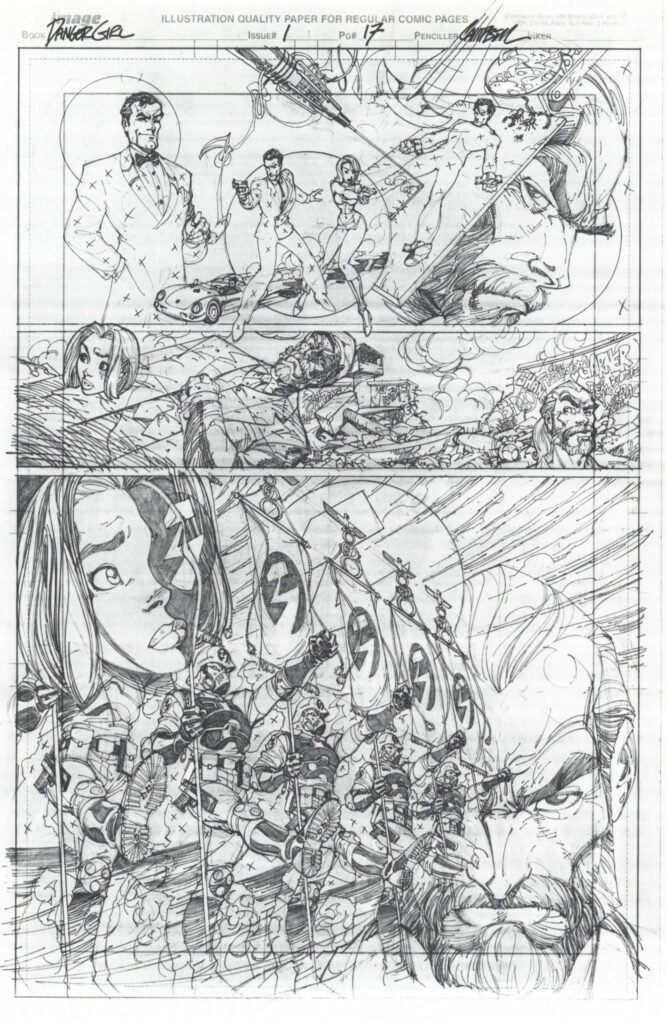
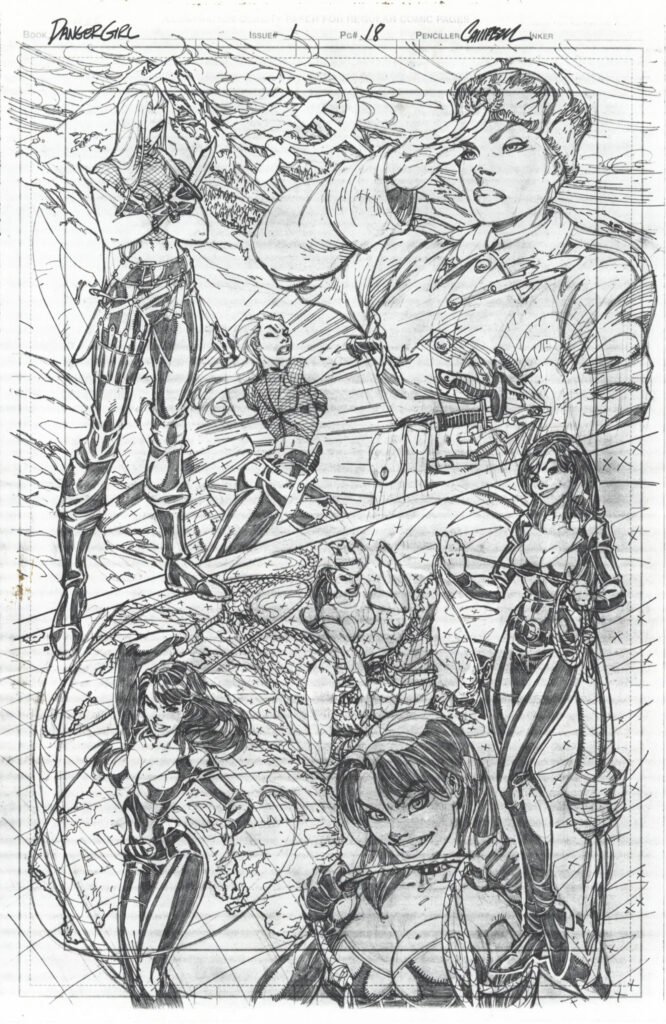
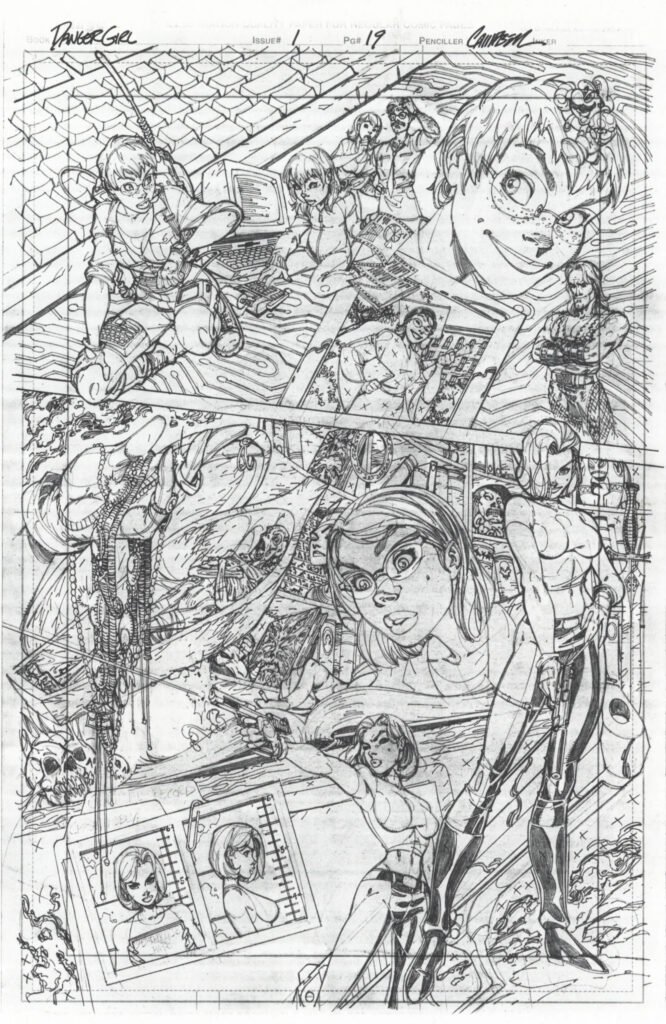
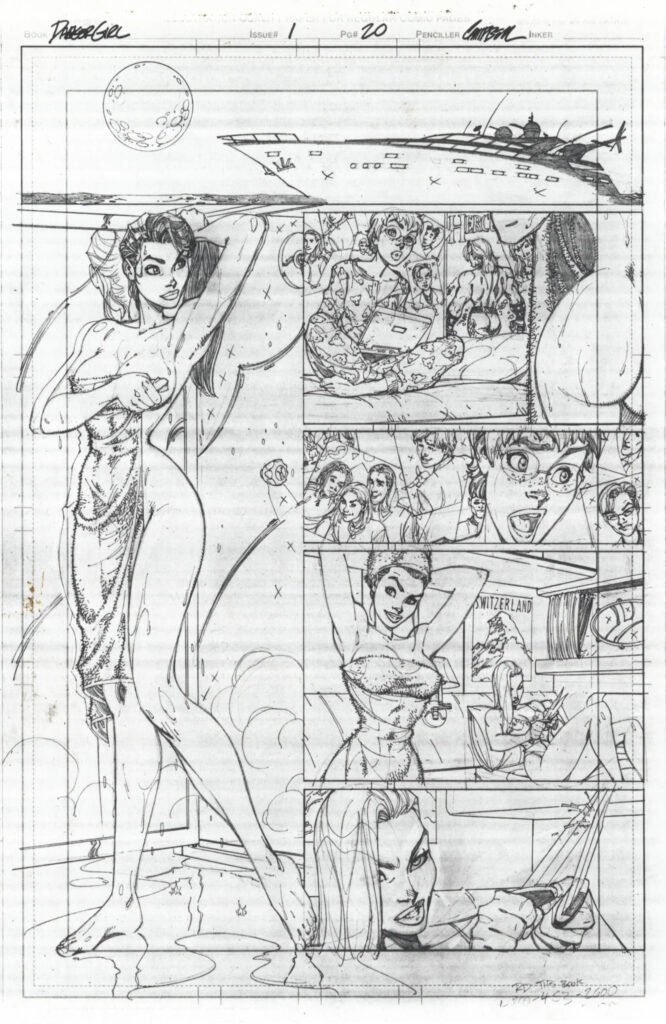
The completed pencils provided the foundation for the finished line art. Some artists produced relatively loose drawings that left more interpretation to the inker, while others supplied highly detailed pencils that established much of the final appearance.
The examples below are sequential pages from the premiere issue of Danger Girl by J. Scott Campbell. Notice how tight and clear his pencil work is on each page. Areas marked with “x” are shorthand to communicate to the inker which areas are to be filled with black.
Inks: Defining The Line Art
The inker developed the pencilled drawings into the finished black line work used in the comic.
Inking was not simply a matter of tracing the original drawing. Decisions about line weight, shadows, texture, and contrast could significantly affect the appearance of the artwork. Heavy blacks could strengthen a composition or establish dramatic lighting, while finer lines preserved details and helped distinguish different surfaces.
Some artists inked their own pencils, while other projects paired pencillers with separate inkers. In those collaborations, the inker interpreted the underlying drawings while working to preserve the intended forms, atmosphere, and storytelling.
The relationship between penciller and inker was an important part of a comic’s visual identity. Their techniques had to work together, and the finished line art needed to support the story as well as provide a foundation for the coloring process.
Editorial remained involved in the larger progress of the book, helping coordinate the creative work and address any changes that affected the pages. The inking stage was one part of a broader production process, not an isolated task performed independently of the rest of the team.
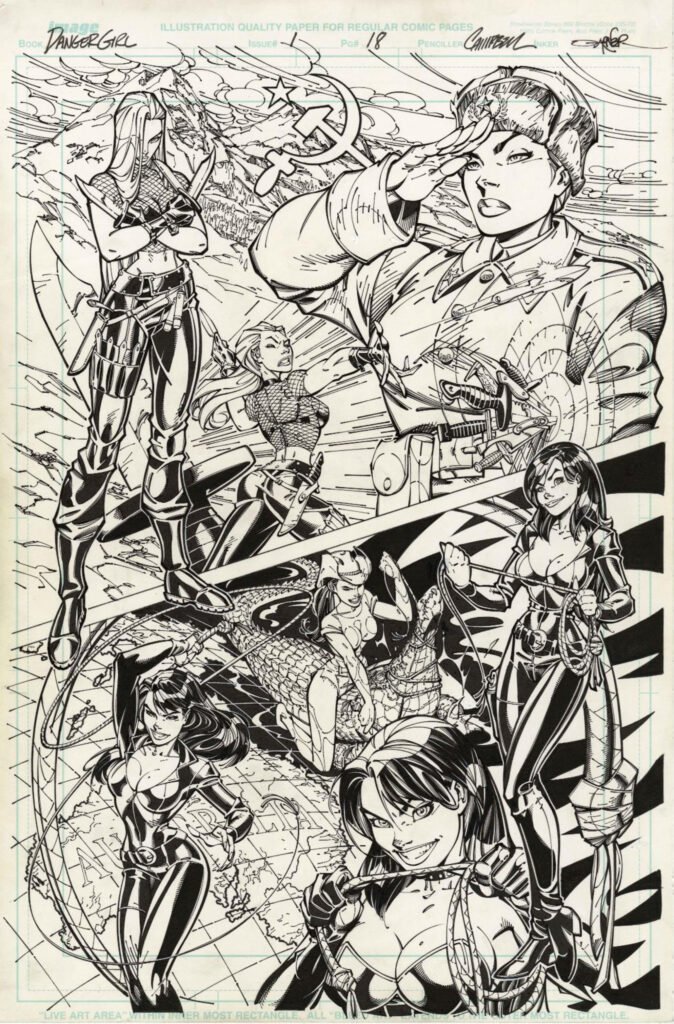
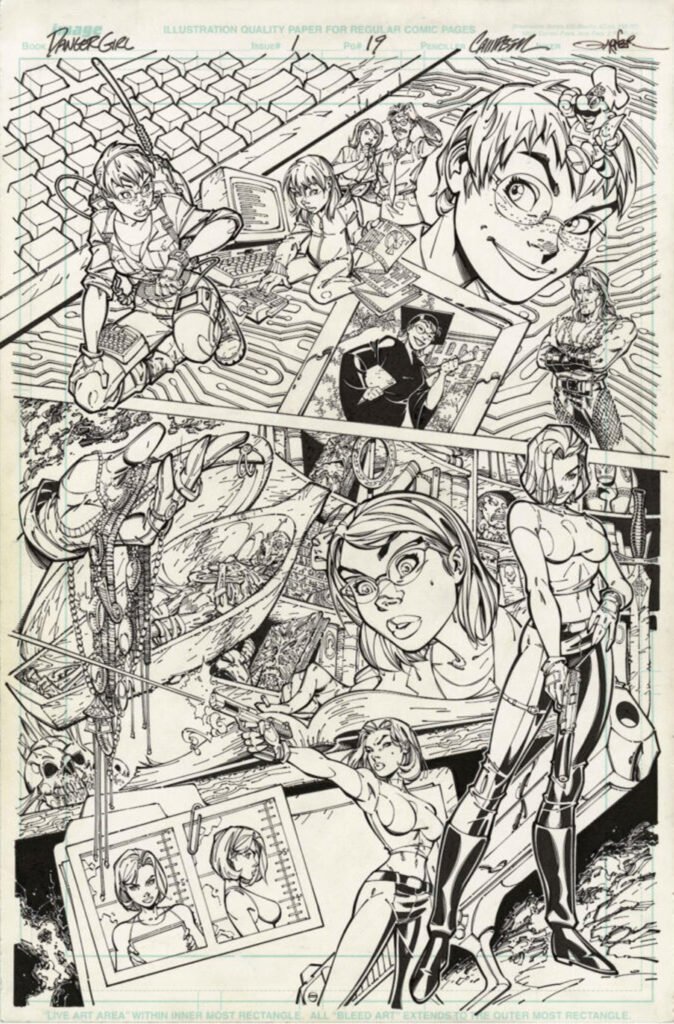
Continuing with Danger Girl #1, you can see the progression from pencils to inks with the examples below by Alex Garner. At first glance they look identical because of the meticulous tight pencil work from Campbell. But a deep look will show all the line weight and line control of an experienced inker adding his own style to the page without losing anything in the process.

Color Guides: Establishing The Intended Look
Color played an important role in the finished artwork, helping establish atmosphere, distinguish characters from their surroundings, and direct attention within a scene. Before the colors could be reproduced in print, however, the production team needed a way to communicate how the finished pages were intended to look.
Color guides provided that reference. They were generally created from reproductions of the artwork, which were colored by hand to indicate the intended colors and tonal effects. The guides communicated decisions about characters, backgrounds, lighting, and other visual details to the people responsible for preparing the pages for reproduction.
At WildStorm, color guides also had a practical role in the studio’s evolving digital workflow. The computers used for coloring during the earlier part of this period were comparatively slow, and completing an entire title could require more people than it would later.
Teams of colorists and production personnel could divide the work on a single book. The guides helped establish a common reference, allowing multiple people to work toward a consistent appearance rather than making independent color decisions without an agreed visual plan.
The person who prepared a guide did not necessarily perform all the computer coloring. The guide and the digital files represented different parts of the process, connected by the need to reproduce the intended appearance of the artwork.
Editorial coordination also mattered here. The colors needed to serve the story and remain consistent with the creative team’s intentions, while the production team had to manage the practical work of completing the pages.
The surviving guides offer a glimpse into that combination of artistic planning and production logistics.
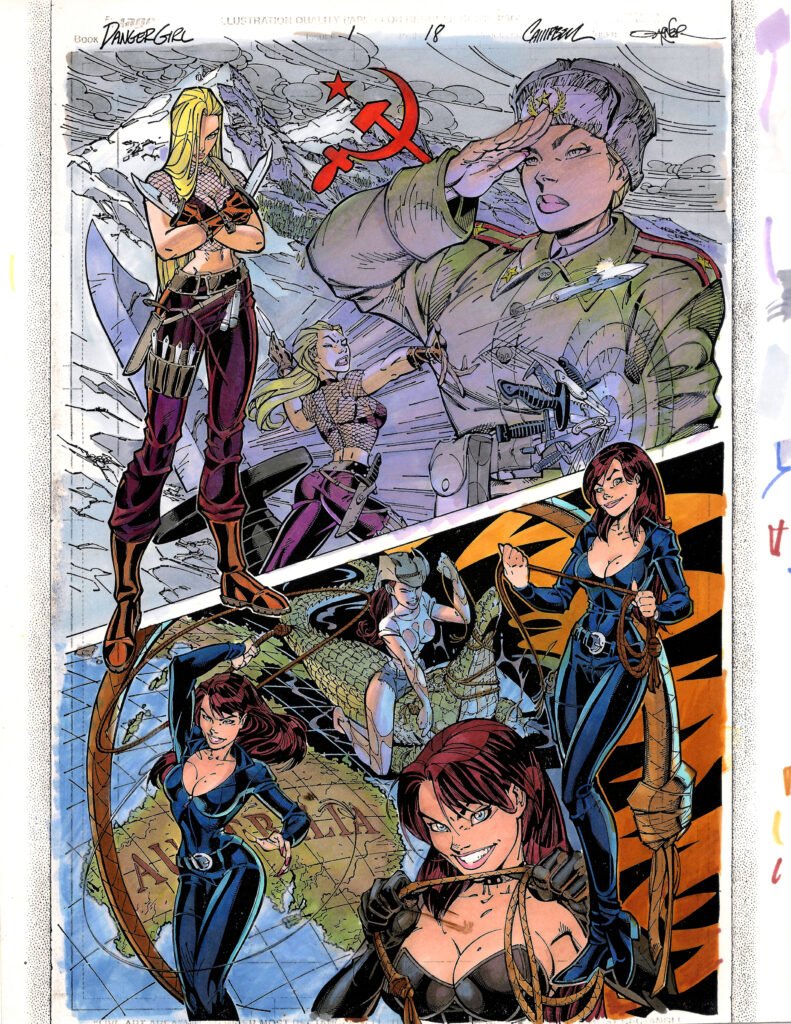
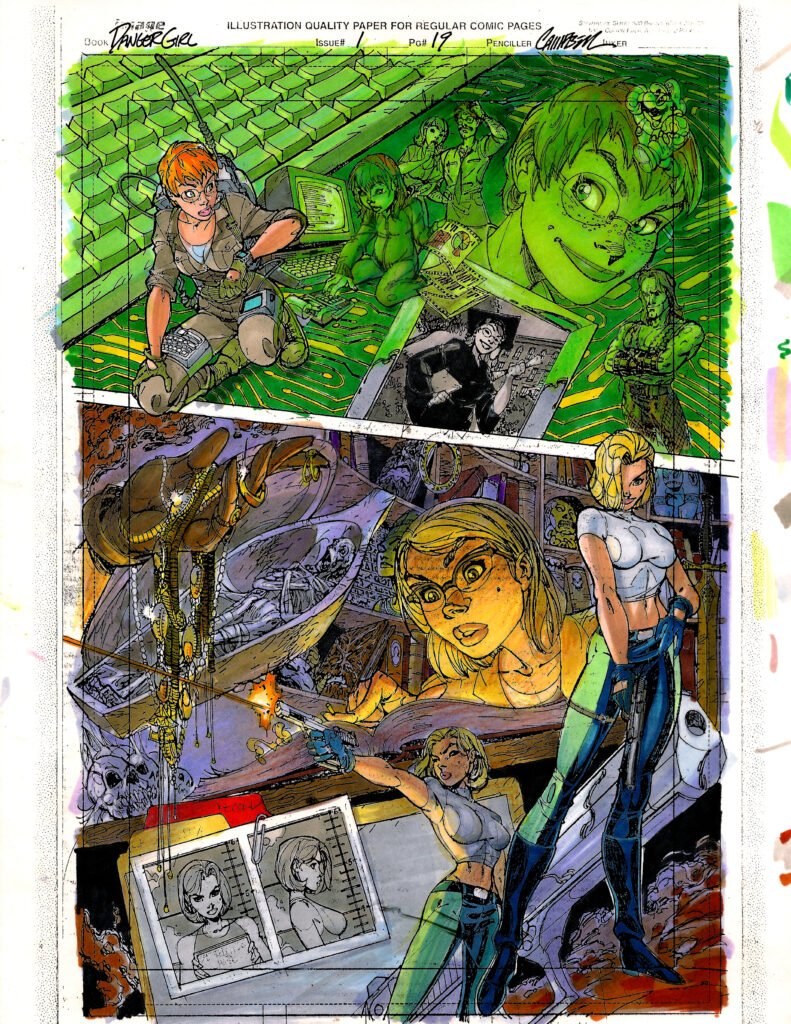
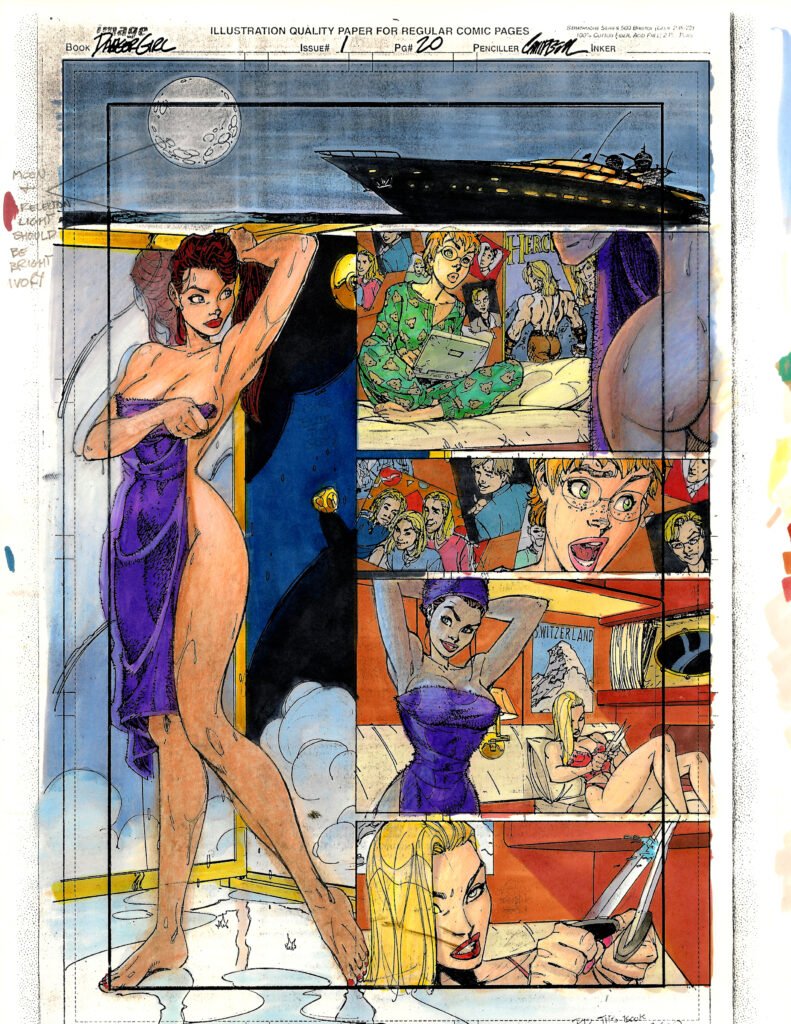
By the time work on Danger Girl #1 was underway, the need for color guides was nearly obsolete. Computer technology had become faster and cheaper, and a team of colorists were no longer needed to make monthly deadlines. This meant a single colorist could style and color an entire issue, and the consistency a color guide provided was no longer needed. This likely makes Danger Girl #1 the last WildStorm published book to receive the hand color guide treatment.
The examples below show the pages of Danger Girl #1 brought to life by Joe Chiodo. Pay close attention to the colors and notes in the margins.
Computer Coloring: A Changing Workflow
Computer coloring became increasingly important to WildStorm’s production during the 1990s. Digital tools allowed colorists to apply colors, create gradients, adjust lighting, and revise their work in ways that were difficult or time-consuming with traditional methods.
The technology also introduced practical limitations. Large, detailed comic pages required substantial computing resources, and the speed of the available equipment affected how quickly the work could be completed.
During the earlier part of the decade, dividing the coloring work among several people helped teams handle the demands of a title. Color guides established the intended appearance, while colorists worked on the digital files that would be used in the finished comic.
As computer hardware improved, the amount of work an individual colorist could complete increased. By the end of the 1990s, it had become more practical for one person to color an entire issue or potentially work on multiple books, reducing the need for the same degree of team-based support.
The change was gradual rather than universal. Different projects could use different arrangements, and traditional reference materials continued to serve a purpose even as more of the work moved onto computers.
The transition affected more than the appearance of the finished pages. It changed how coloring work could be divided, scheduled, and coordinated. Editorial and production staff still needed to keep the individual contributions aligned with the requirements of the book, but the available technology increasingly influenced how those contributions were organized.
WildStorm’s color guides and digital production materials provide a record of this period of change.
We return to StormWatch (Vol. 2) #4 with these color proofs by Laura Martin. These are in-house prints of the digital colors, showing how choices made on the screen will translate to the printed page. The role editorial plays is on display here as the margins are used to communicate back and forth between team members.
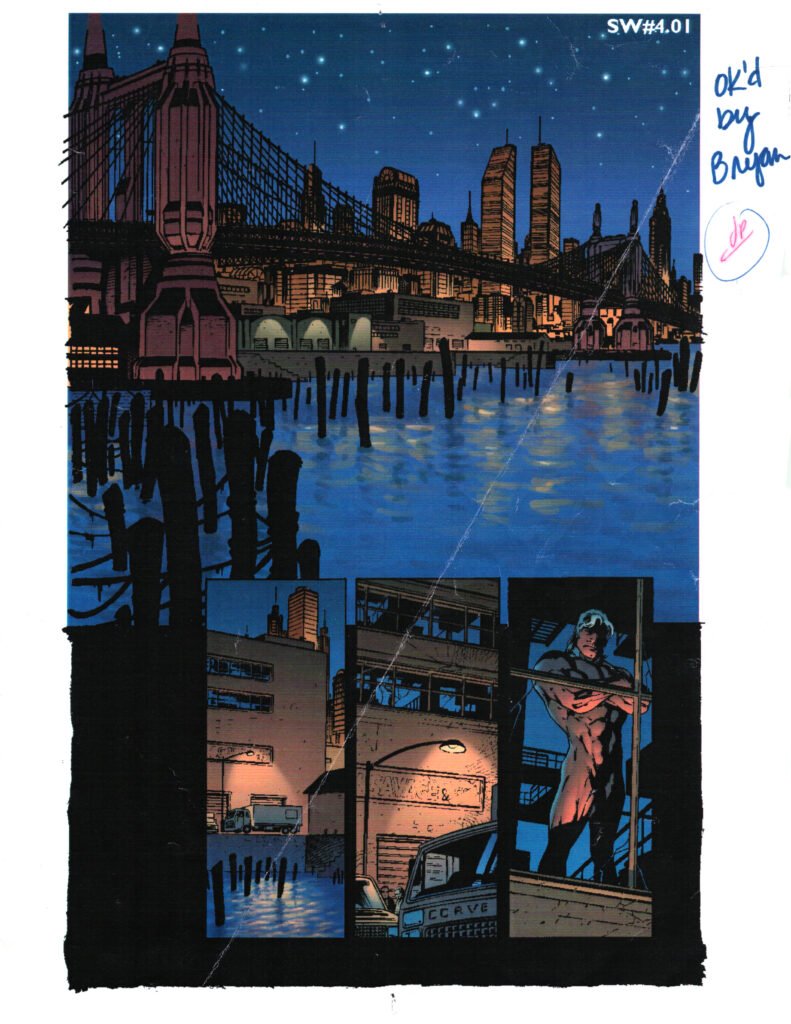
Page 1
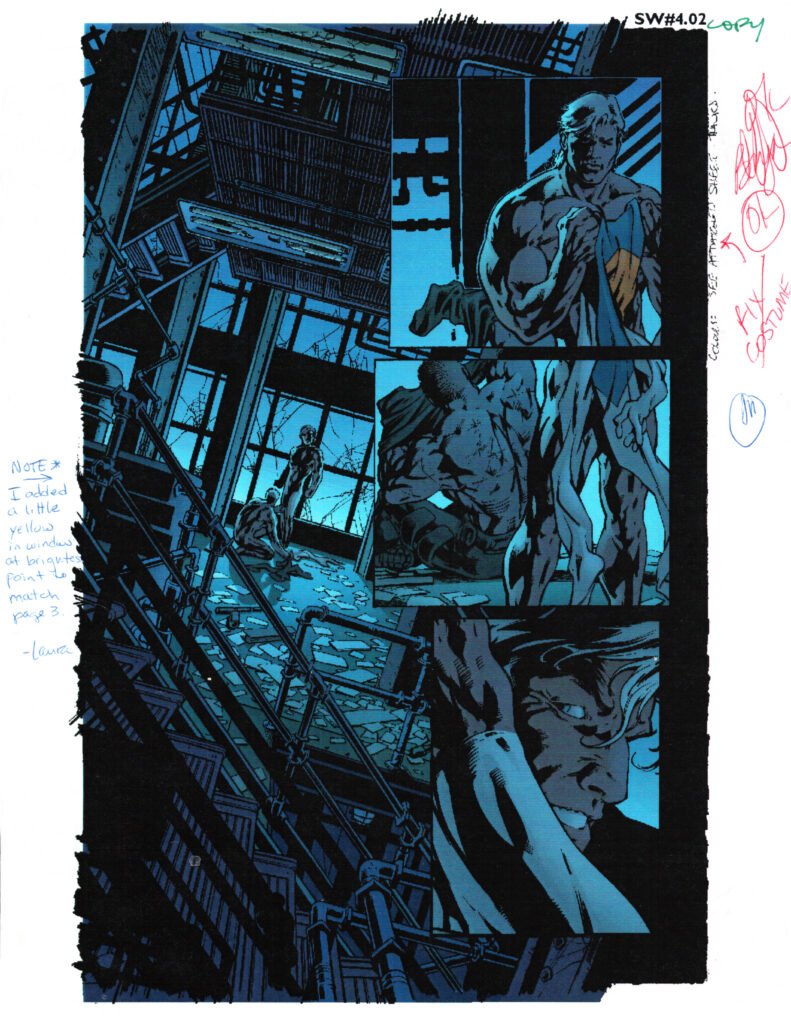
Page 2
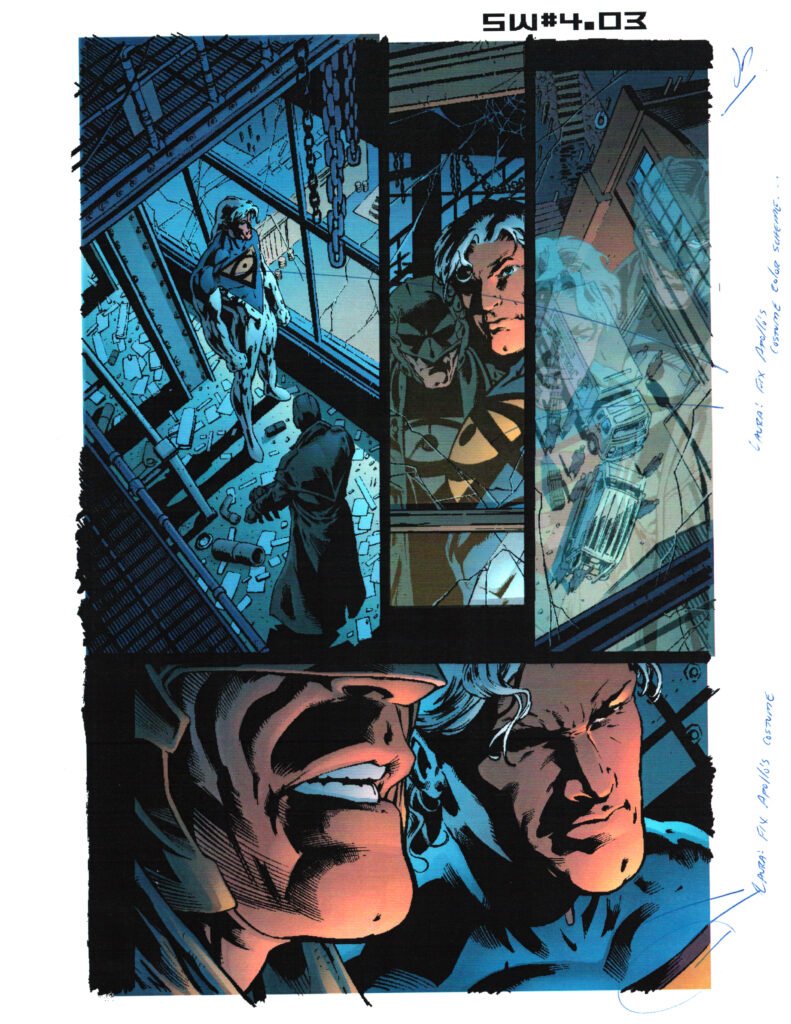
Page 3
Lettering: Bringing Words And Artwork Together
Lettering incorporated the dialogue, captions, sound effects, and other written elements into the comic’s pages. Although the writer established the words, the letterer determined how they would be presented alongside the artwork.
Speech balloons had to fit within the panels without obscuring important details, and their placement helped guide readers through the intended dialogue sequence. Captions supplied additional information, while sound effects could become part of the visual composition itself.
Lettering was also changing during the 1990s. Traditional hand-lettering remained in use, but digital lettering offered new ways to position text, make corrections, and prepare pages for production.
WildStorm worked with Comicraft on some of its titles. Digital methods allowed lettering to be prepared electronically and incorporated into the production workflow, making adjustments possible without necessarily altering the original artwork.
Lettering did not always have to follow coloring in the actual production schedule. The two tasks could be handled separately and brought together at a later stage. The order used here reflects the progression of the article rather than a fixed sequence followed on every book.
Regardless of the workflow, lettering had to work with the artwork and the story. Editorial coordination helped ensure that dialogue, captions, and page layouts remained consistent with the intended reading experience, while changes to the script or artwork could require adjustments to the lettering as well.
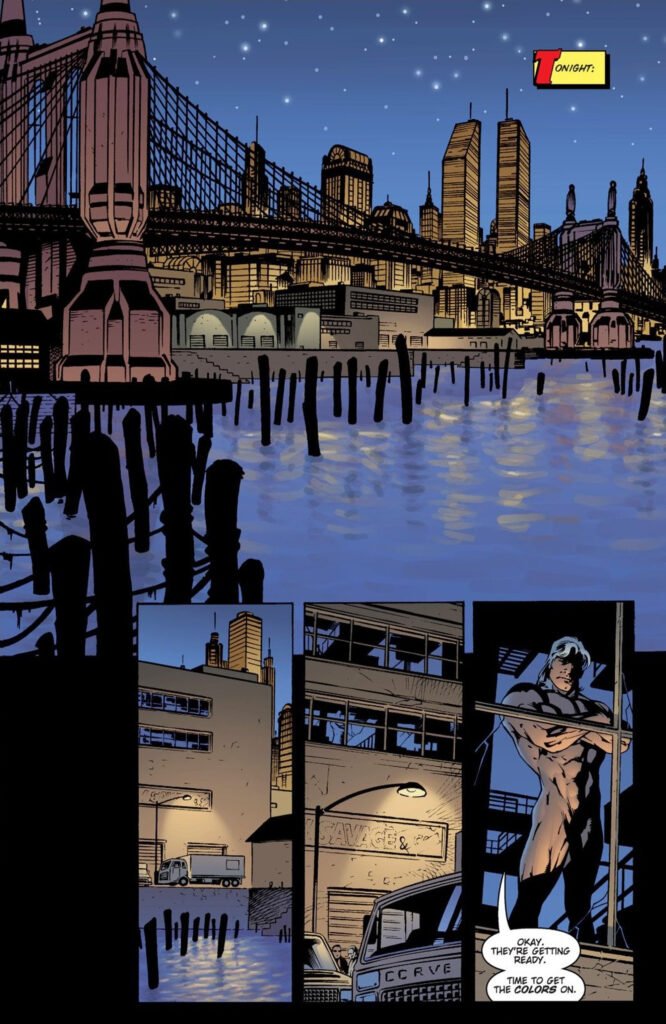
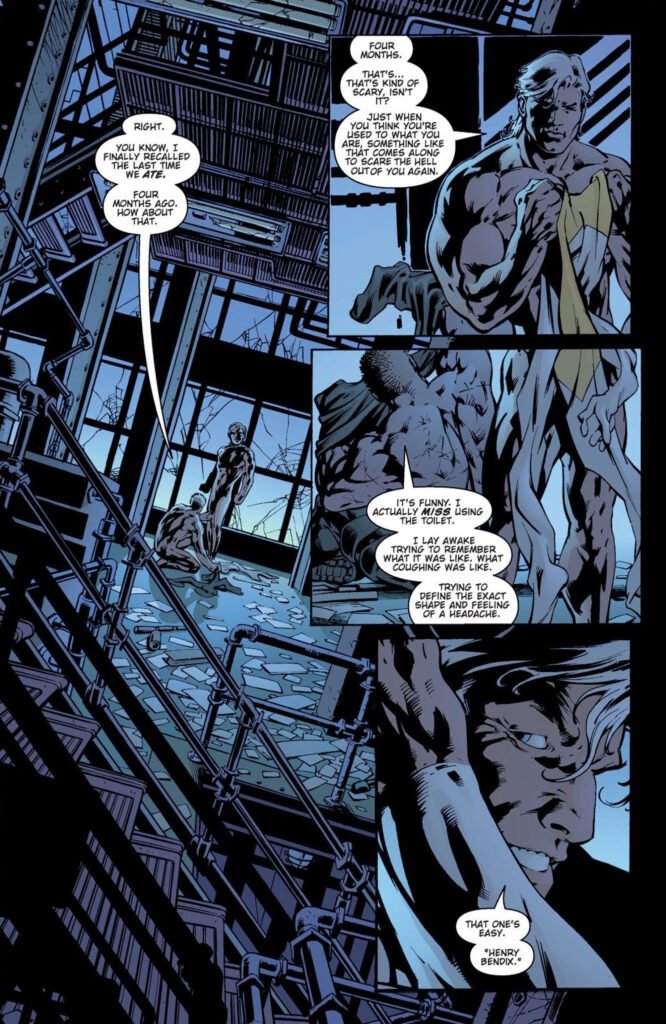
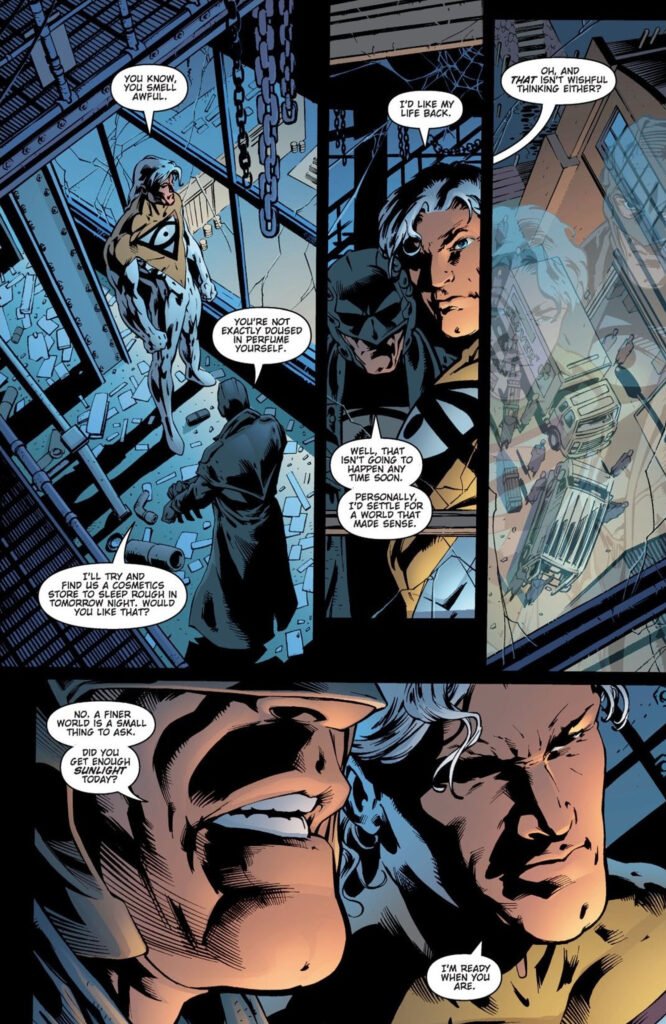
First, let’s look again at StormWatch (Vol. 2) #4 with lettering by Amie Grenier. We can see how the writer and penciller working together set the letter up for success by knowing what will fit on a page and where to make space for it. The collaboration here is executed as the highest level.
Page 1
Page 2
Page 3
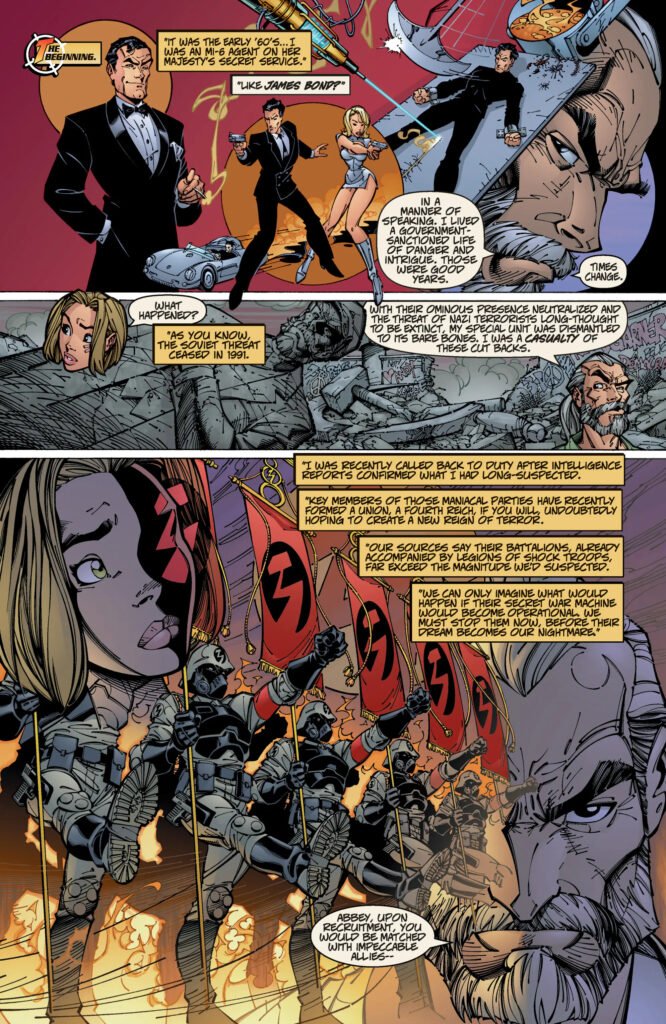
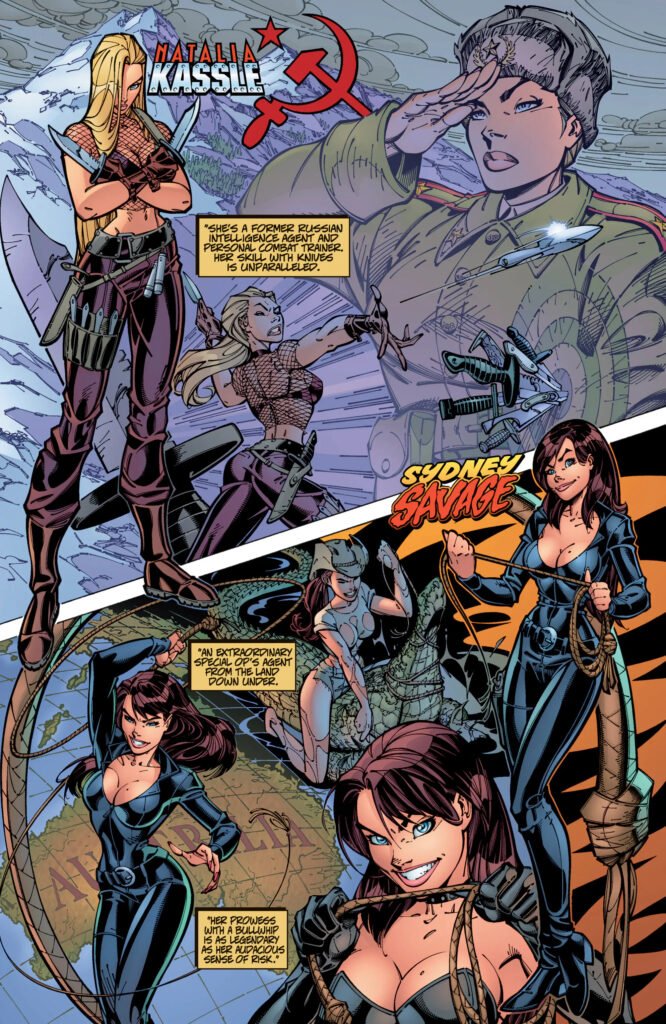
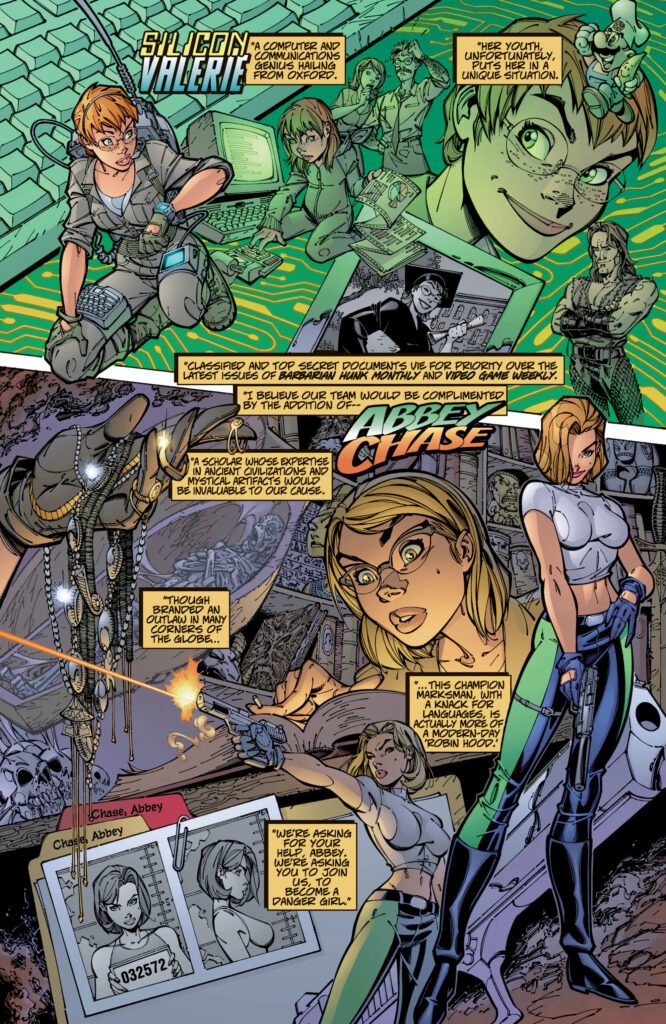
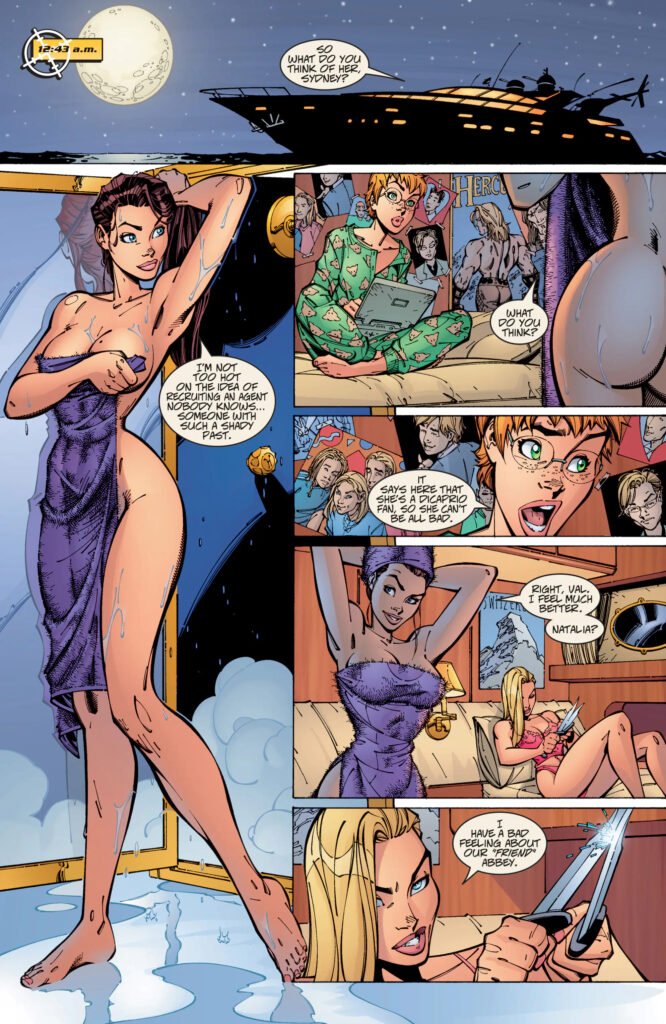
Here’s another example of amazing comic book collaboration in Dave Lanphear’s lettering on Danger Girl #1. Note how the text flows perfectly from panel to panel, is clear to follow, and doesn’t overtake the artwork. This is only possible when every member of the team understands the entire comic book process.
Color Separations: Preparing For Printing
Once the pages had been colored and the other elements prepared, the artwork needed to be converted into materials suitable for printing.
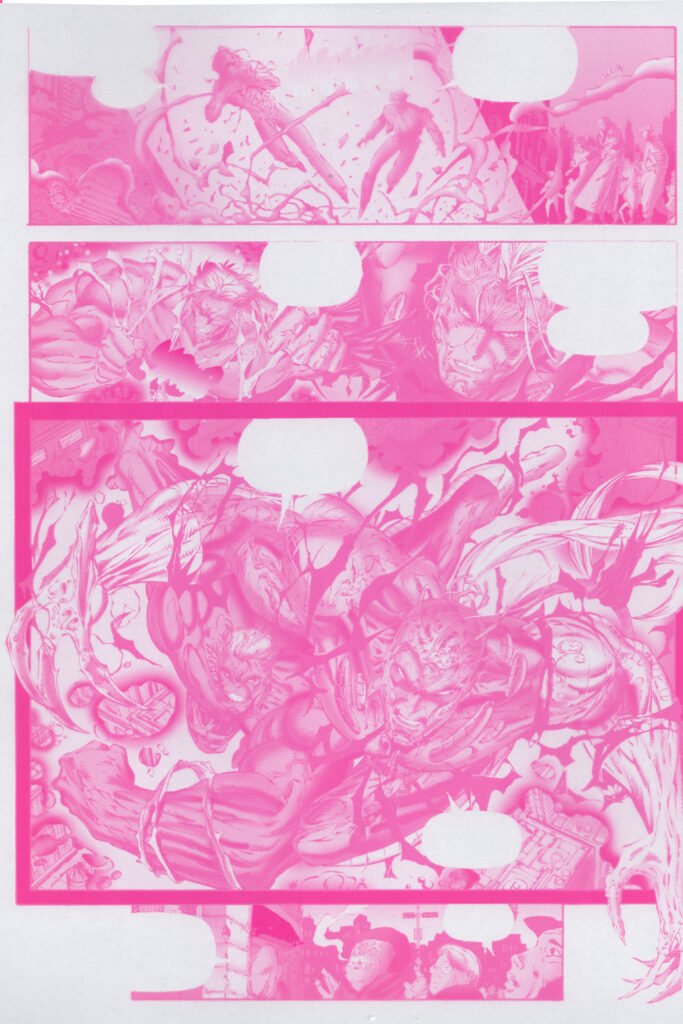
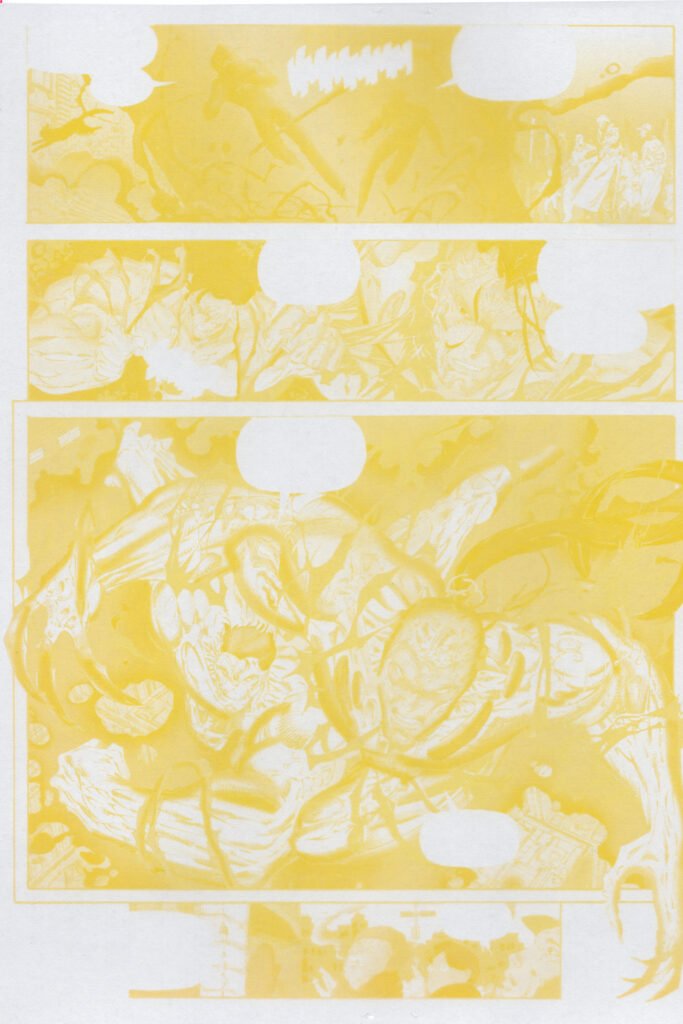
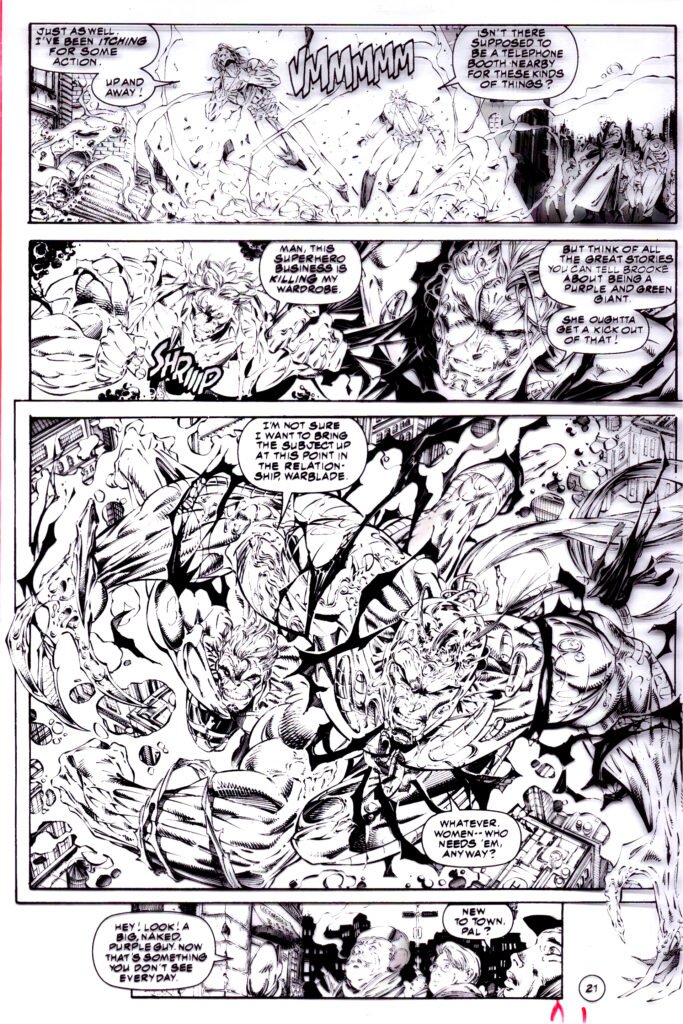
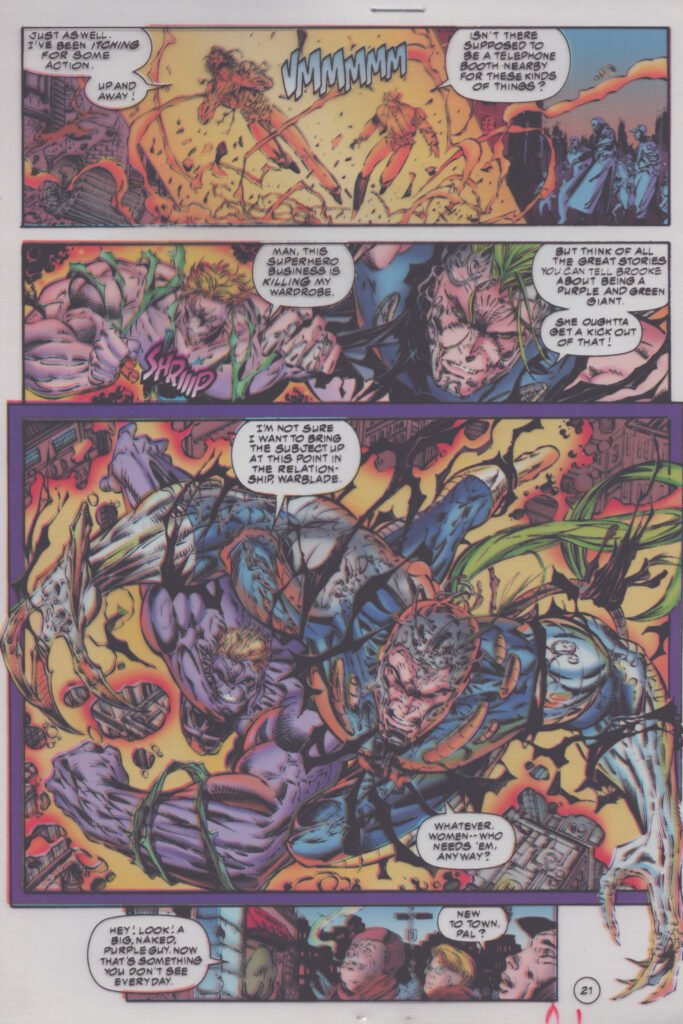
Comic books were generally printed using four process colors: cyan, magenta, yellow, and black, commonly abbreviated as CMYK. By combining these inks in different proportions, the printing process reproduced the colors and tonal effects of the finished artwork.
Color separation involved preparing the color information for those individual printing colors. Earlier methods relied on photographic and mechanical processes, films, and other specialized materials. As digital production developed, computers increasingly handled these tasks electronically.
Coloring and color separation were related, but they were not the same responsibility. The colorist established the appearance of the page, while the separation process prepared the information needed to reproduce that appearance through the printing process.
WildStorm’s production credits sometimes distinguished between computer coloring, color coordination, and color separations. These distinctions reflected the different kinds of work involved in preparing a comic for publication.
As digital workflows became more integrated, some of these tasks could be handled within the same production environment. The technical process changed, but the goal remained the same: to reproduce the artwork as intended.
The prepared material then had to be checked before the book could proceed to printing. That was where production proofs became particularly useful.
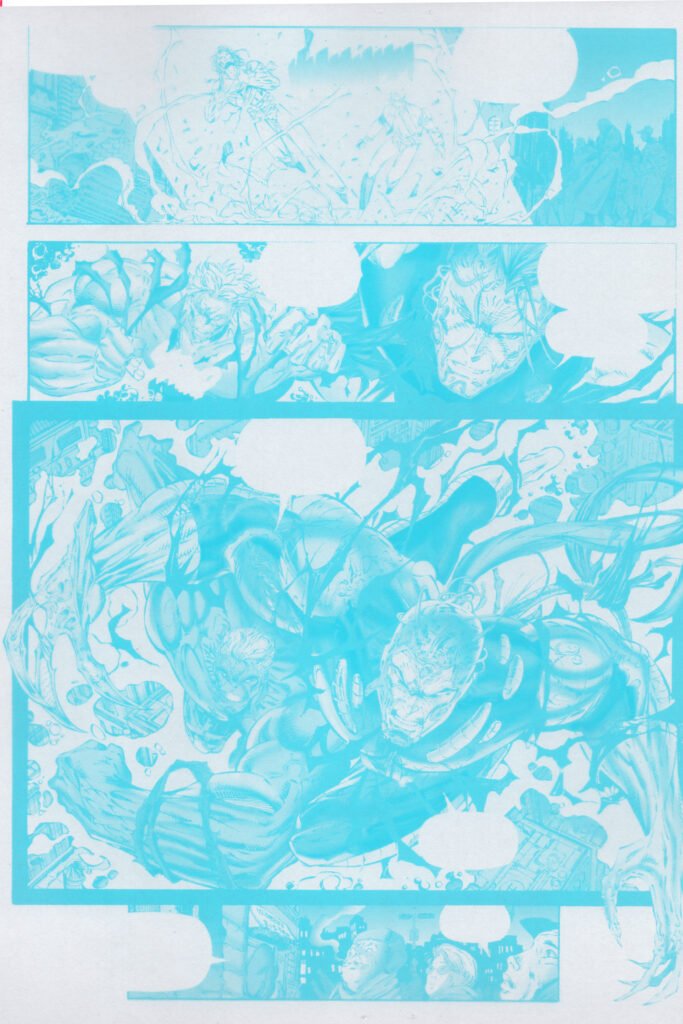
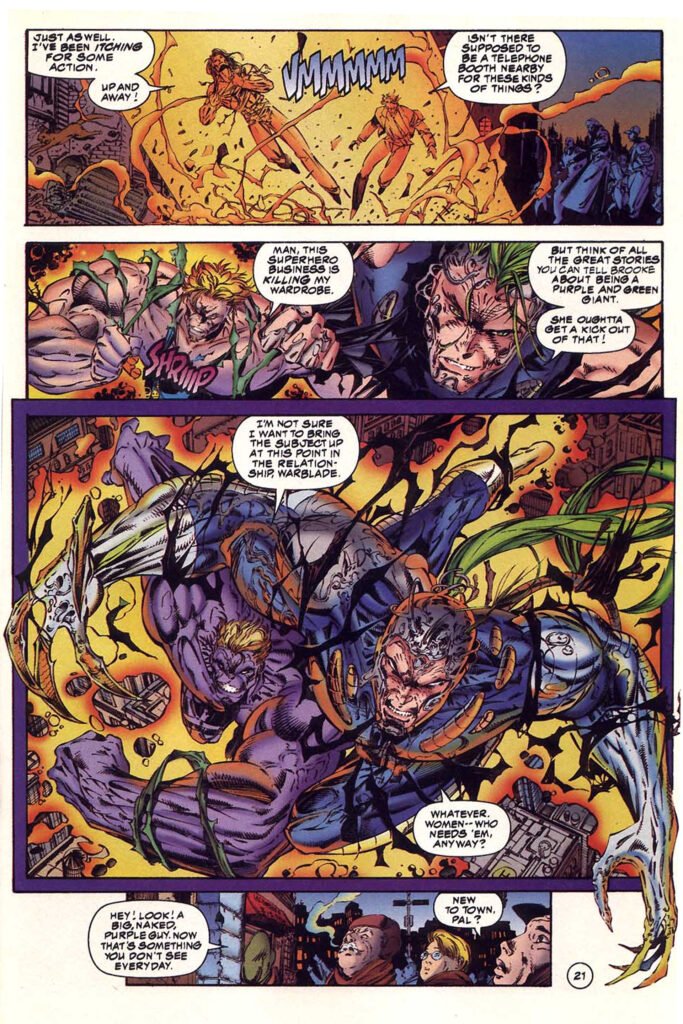
The images below are the production acetate film for WildC.A.T.s #8. Colors for this issue were created by Joe Chiodo with color separations by Joe Dunn, Ben Fernandez, and Jessica Ruffner. You can see the color separation process clearly here with each color having its own layer, combining to create the final image.
“Y” Layer
“K” Layer
Production Proofs: Checking The Printed Result
Production proofs provided an opportunity to review how the prepared artwork reproduced in physical form. Depending on the type of proof, they could reveal problems with color, registration, or other aspects of the printing process before production moved forward.
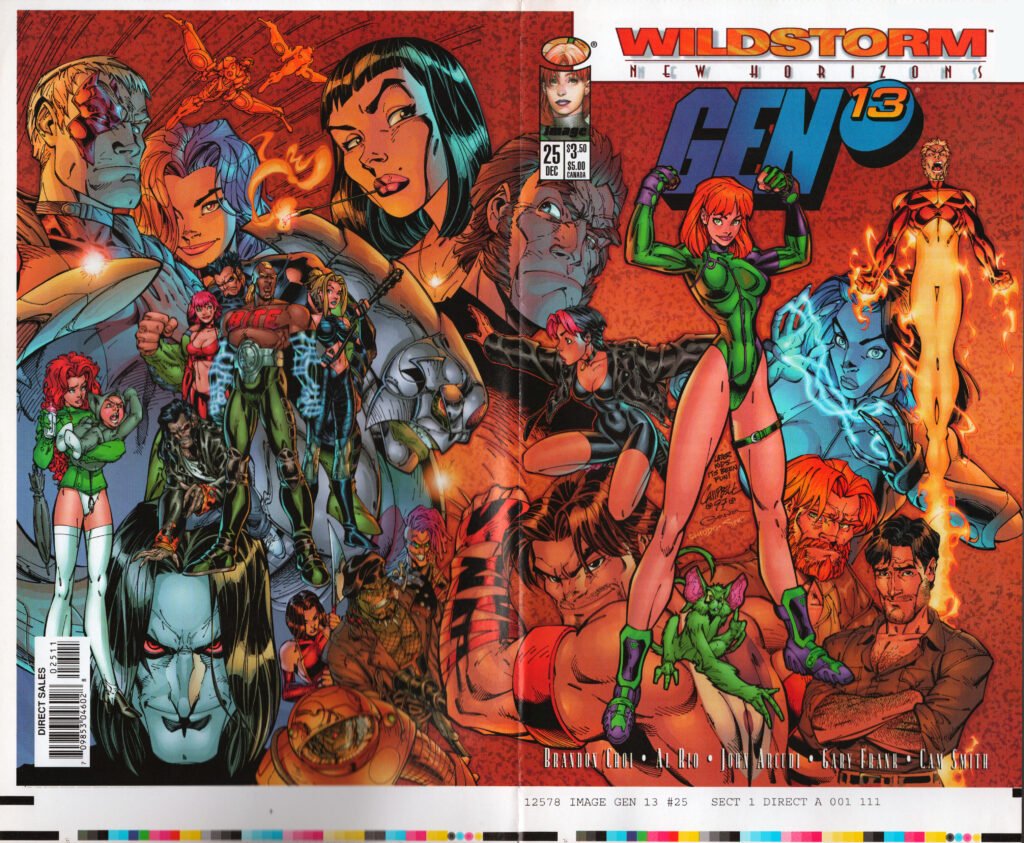
Some proofs survived as uncut sheets containing multiple comic pages. Along the edges, outside the area that would become the finished pages, these sheets could include color-control bars, registration marks, and other technical information used during production.
Color control bars helped printers evaluate how the inks were reproducing, while registration marks assisted in checking the alignment of the different printing colors. These markings were not part of the comic’s artwork. They belonged to the manufacturing process and would normally disappear when the printed sheets were trimmed.
A production proof served a different purpose from a hand-colored guide. The guide communicated the intended appearance of the colors; the proof allowed the prepared work to be examined in a printed or proofed form. The precise role of an individual proof depended on the stage and method of production it represented.
Reviewing proofs also formed part of the larger process of getting a book ready for publication. Creative, editorial, and production considerations had to come together, and any required corrections needed to be addressed before the work could be finalized.
For collectors, surviving proofs preserve details that readers would never have seen in the finished comic. The uncut sheets reveal not only the pages themselves but also the technical markings associated with preparing them for print.
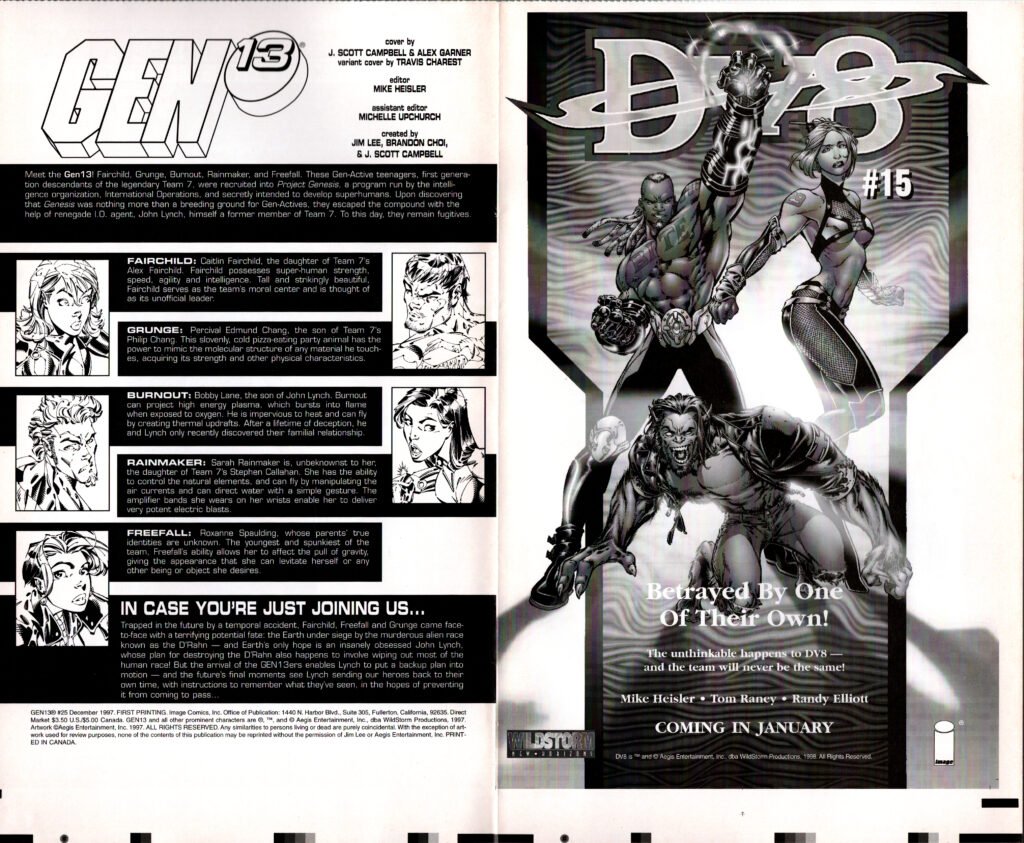
The examples below come from the printer proof of Gen 13 #25. Notice the color control bar and job code at the bottom. These proofs were untrimmed, unbound full issues that served as the final checkpoint before mass printing.
Printing: Bringing The Book Together
After the production materials had been prepared and the necessary reviews completed, the pages were ready for printing.
The printer used the prepared materials to reproduce the artwork. The printed sheets were then processed, trimmed, and bound into the finished comic, with the exact manufacturing arrangements depending on the publication.
By this point, the work of the creative team and the production staff had come together in a single object. The script, pencils, inks, colors, lettering, and technical preparation all contributed to the book that readers eventually encountered.
The finished comic concealed much of the work that had gone into its creation. The original drawings, color guides, digital files, and production proofs were not part of the published book, but each could preserve evidence of a different stage of its production.
Editorial coordination helped keep the larger project moving toward publication, while production personnel handled the technical requirements of preparing and manufacturing the finished pages. These responsibilities were distinct, but they were connected by the need to deliver a complete book.
A Studio In Transition
WildStorm’s production methods during the 1990s reflected an industry in the process of adopting new technology. Traditional drawing and physical color guides continued alongside computer coloring, digital lettering, and electronic prepress methods.
The changes affected how people worked as well as the tools they used. Faster computers altered the way coloring tasks could be divided, while digital workflows created new ways to prepare, revise, and exchange production materials.
These developments did not eliminate the need for collaboration. Writers and artists still developed the stories and images, editors coordinated the creative process, and production personnel prepared the work for reproduction. Technology changed how those responsibilities were carried out and how the different stages fit together.
It also changed the kinds of evidence that remained after publication. Original pencils, inks, color guides, and production proofs preserved physical traces of the process, while digital work could exist in files that did not necessarily leave behind comparable physical artifacts.
For collectors and researchers, these materials offer a way to look beyond the finished comic and examine how the studio’s work was created.
Looking Back At Studio Secrets
WildStorm’s proposed Studio Secrets book never reached publication, but the idea behind it remains a useful way to explore the studio’s history.
The finished comics document the stories and artwork that reached readers. The production materials reveal more about the work behind them: the different stages involved, the people who contributed, and the technological changes that shaped the process.
No single page or artifact tells the entire story. Taken together, however, the surviving materials help reconstruct the creative and technical work that went into making WildStorm comics during the 1990s.
Looking beyond the printed page brings that work into view, and gives us a better understanding of how the finished books came to be.