
WildStorm, C-23, & The ARC System
A New Kind Of Trading Card Game
In 1998, Wizards of the Coast introduced the ARC System, a collectible card game system designed to bring different fictional universes together under a shared set of rules. Rather than developing an entirely separate game for every property, Wizards created a common framework that allowed players to collect cards from different series and combine them in the same deck.
The first release built around this system was C-23, a science-fiction property developed in collaboration with WildStorm Productions. It was followed by Xena: Warrior Princess and Hercules: The Legendary Journeys, bringing characters and settings from comics and television into the same gaming environment.
The ARC System was designed to be accessible to players who were unfamiliar with collectible card games while still offering the strategic decisions expected of the genre. Its shared mechanics also gave the individual properties a connection beyond their own stories and characters.
Coverage of the ARC System and its games appeared in The Duelist, a magazine published by Wizards of the Coast that originally focused on Magic: The Gathering before expanding to cover other collectible card games. Its articles, advertisements, and promotional material provide a contemporary look at how the ARC System was introduced and marketed to players.
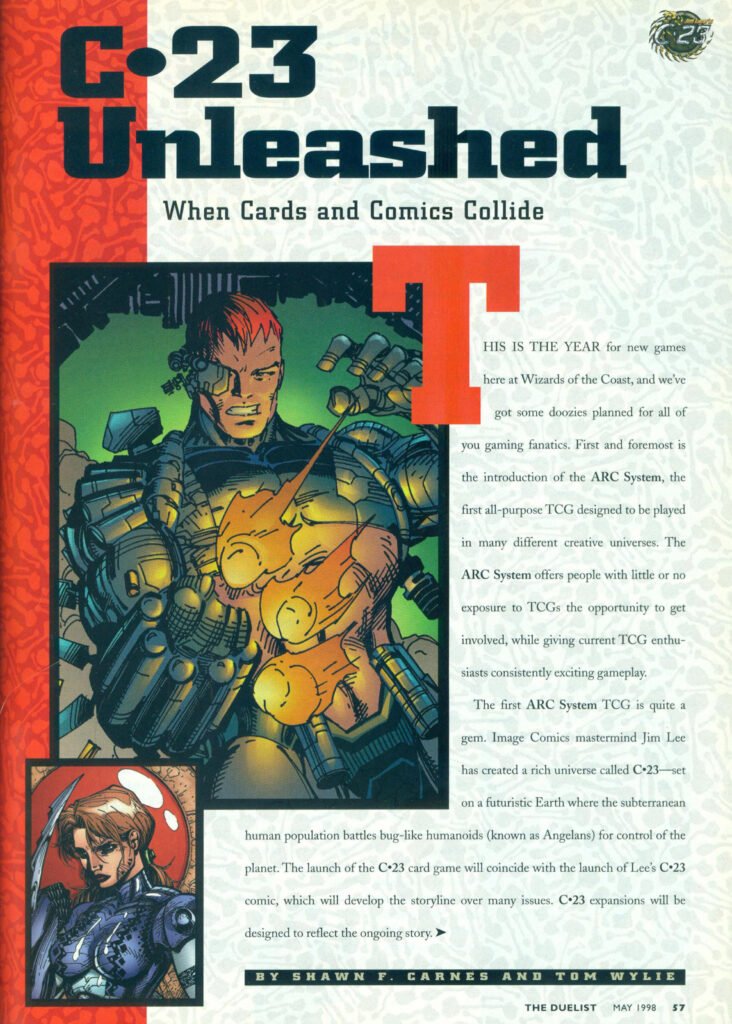
C-23: When Cards And Comics Collide
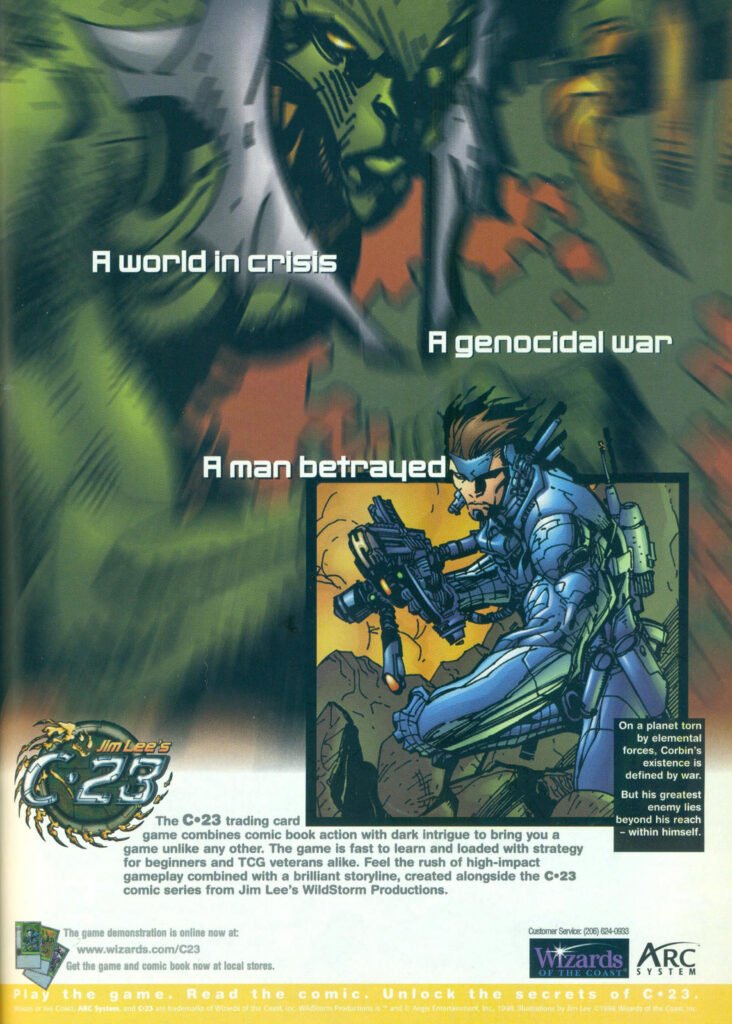
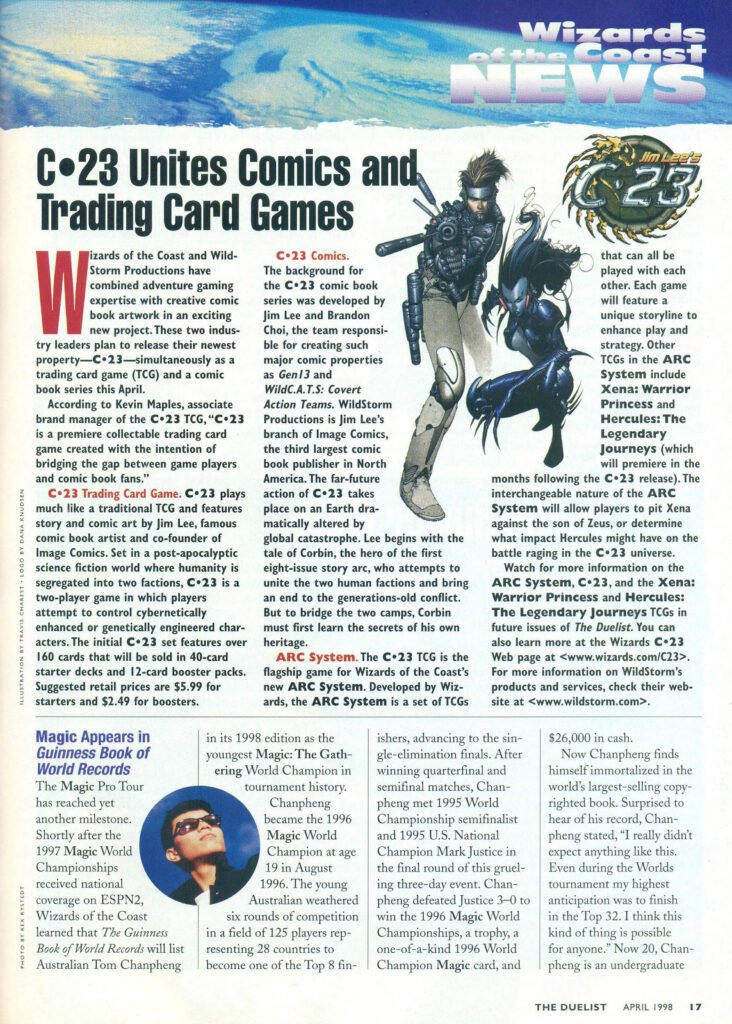
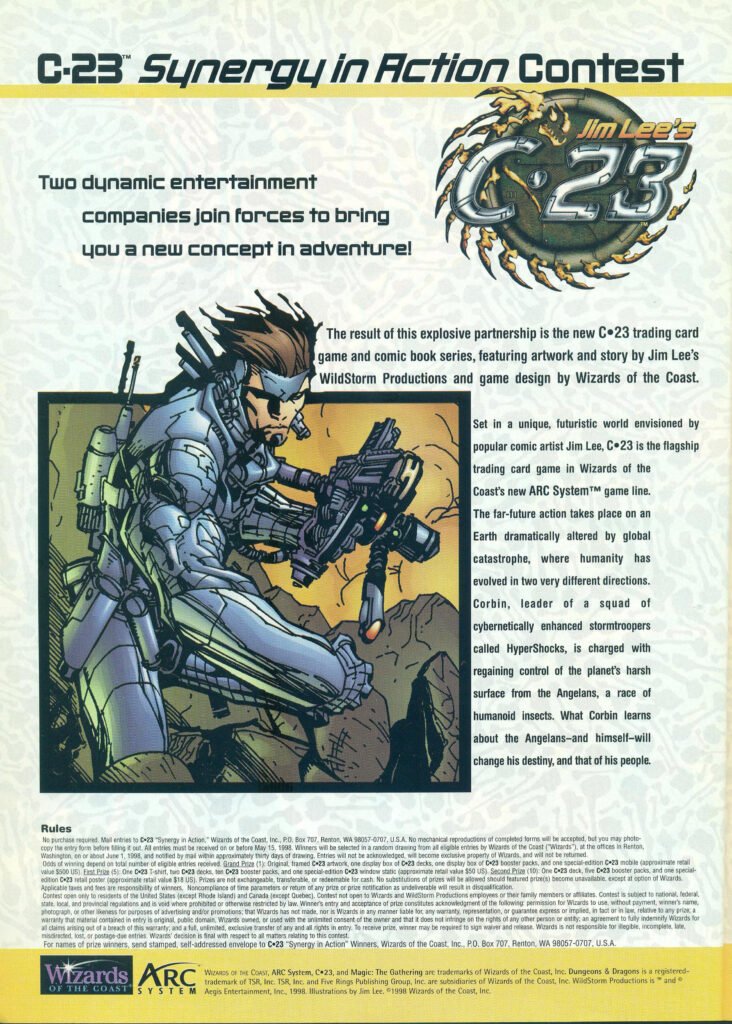
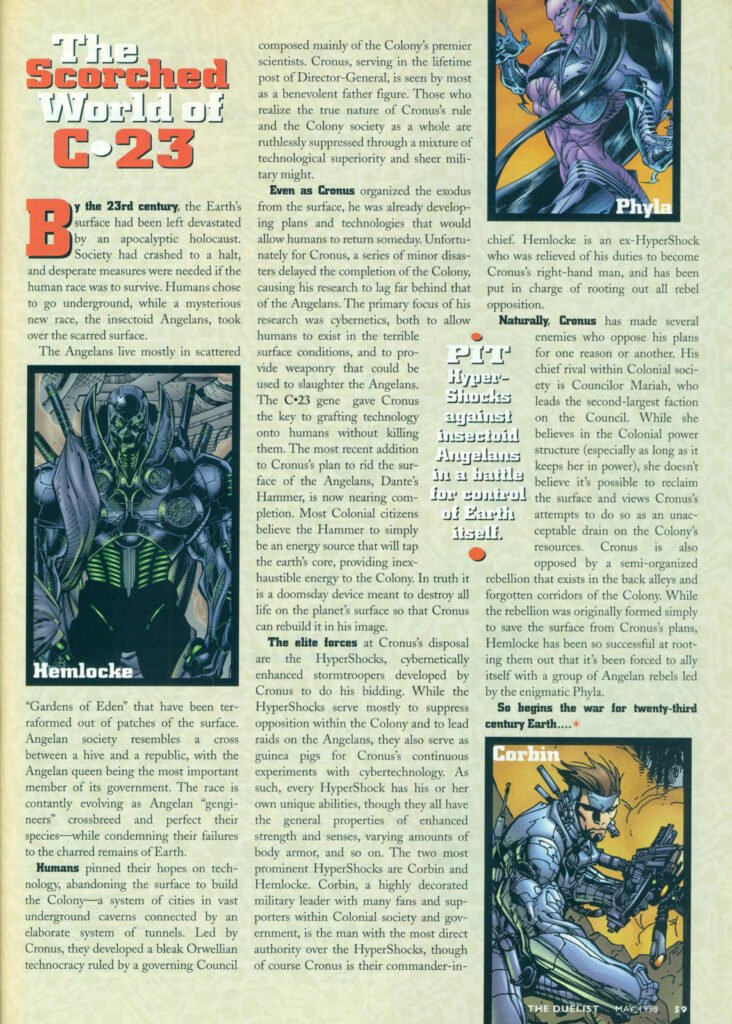
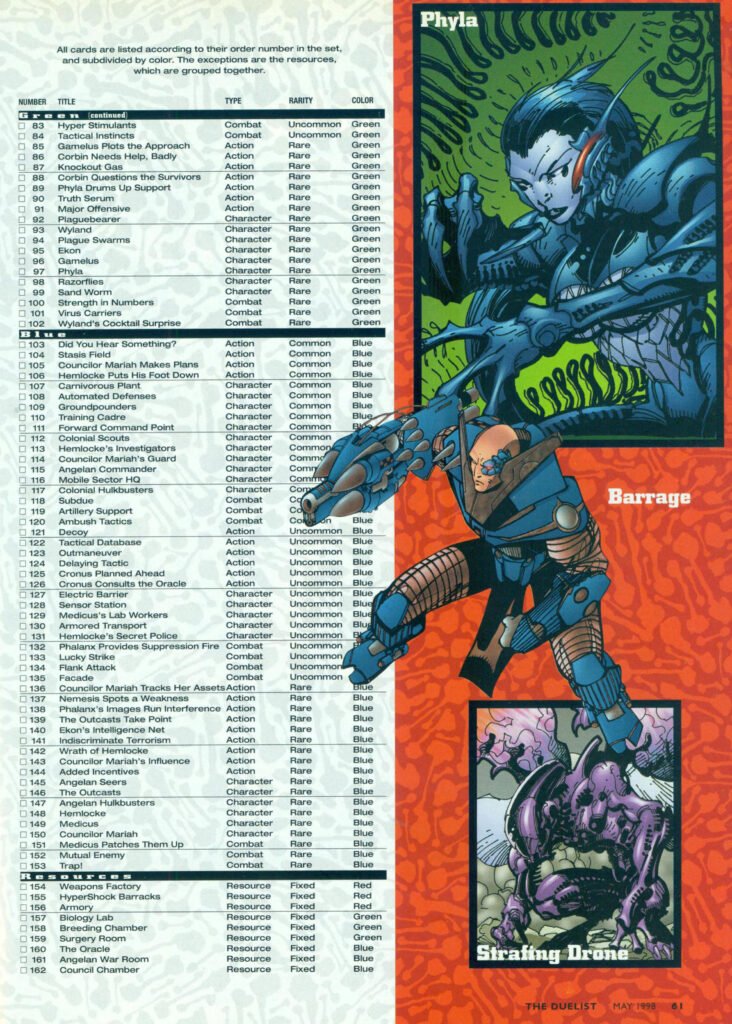
C-23 launched in April 1998 as both a comic book and a collectible card game. The science-fiction setting followed the conflict between subterranean humanity and the bug-like humanoid Angelans, providing a story that could develop across both media.
The simultaneous launch of the comic and card game was a central part of the concept. As the comic’s story progressed, future card releases could reflect developments in the narrative, allowing the game and the printed series to complement one another. A contemporary article in The Duelist described this relationship as an opportunity for the comic and card game to evolve together.
WildStorm Productions was responsible for the creative side of C-23, including its comic-book development and the artistic talent involved in the property. The card art featured work by Lee Bermejo, Alexander Lozano, Ryan Benjamin, Michael Chang, Adam Hughes, Terry Shoemaker, Jim Lee, and others.
The ARC System itself, however, was a Wizards of the Coast creation. Wizards developed and managed the underlying game system, while WildStorm contributed the C-23 universe and its creative material.
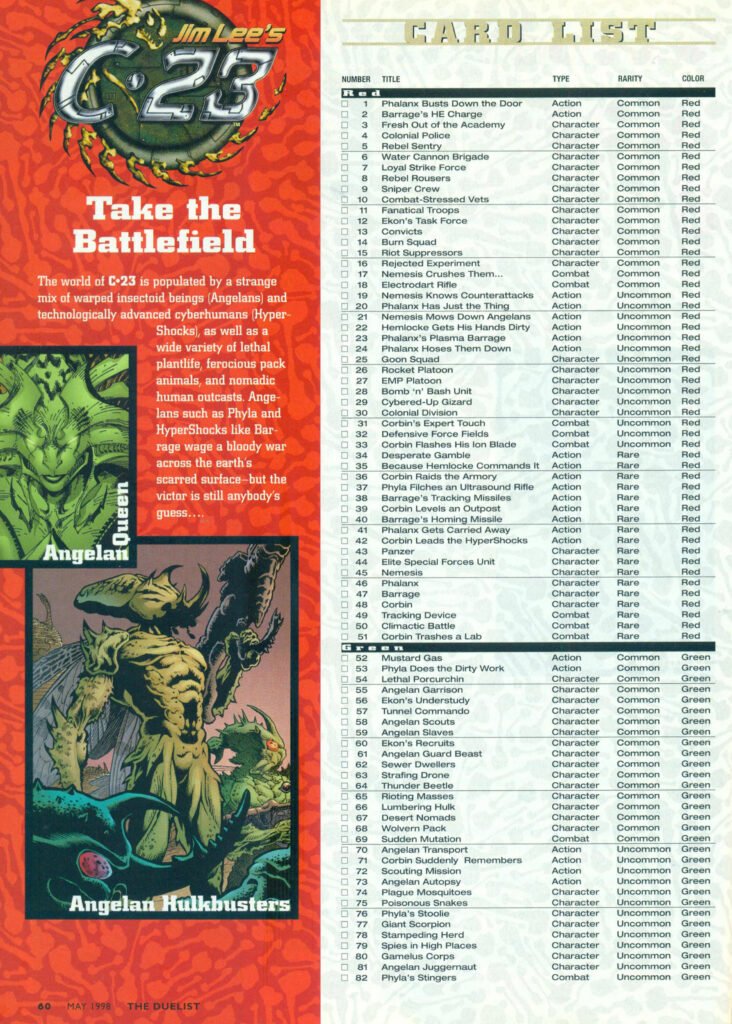
The original C-23 set contained 162 cards and was sold in 40-card starter decks and 12-card booster packs. The product combined collectible artwork with a playable game, giving readers another way to engage with the world introduced in the comic.
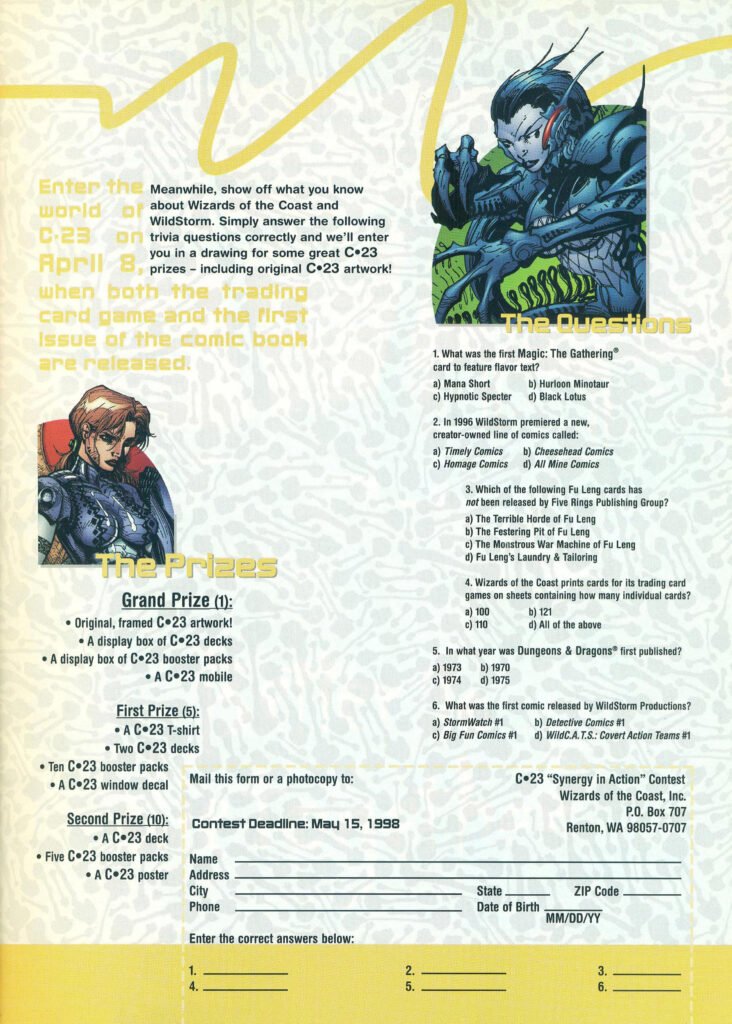
The comic also included promotional material connected to the card game. C-23 #3, for example, contained the Corbin Promo 2 card, physically connecting the comic-book release to the growing card collection.
The ARC System
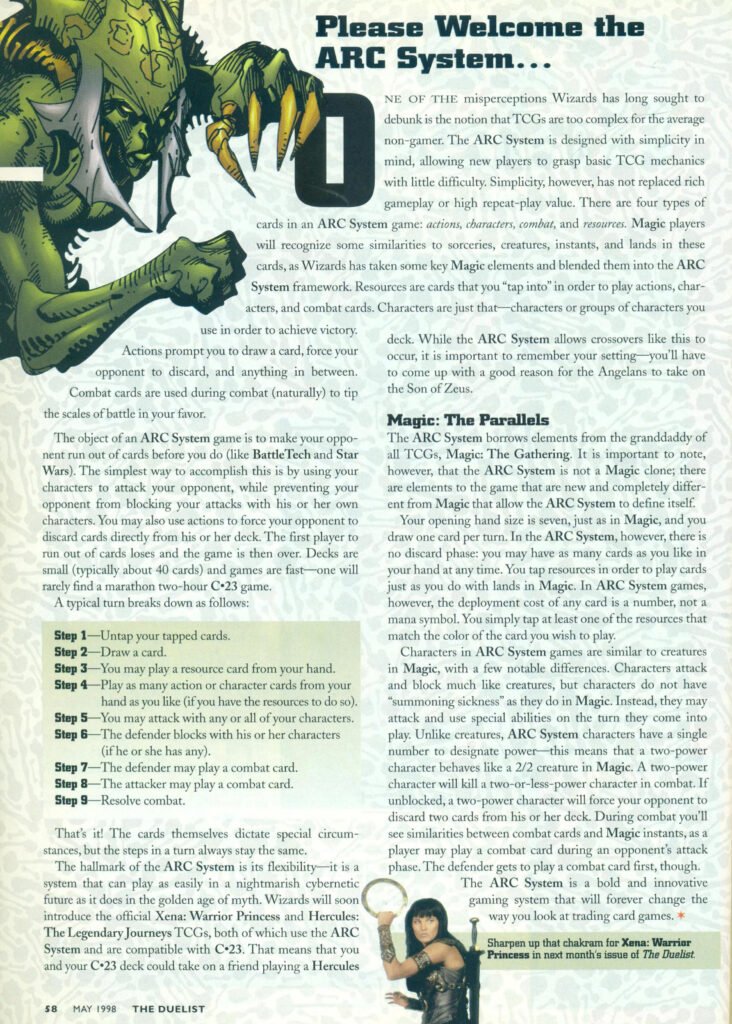
The ARC System was developed by Wizards of the Coast as a flexible trading card game framework that could be used across multiple fictional universes. Instead of requiring players to learn an entirely different game for each property, the system established a common foundation of rules and card types. Characters and abilities from different ARC System games could be combined, allowing players to create decks that crossed the boundaries between their respective worlds.
The system used four primary card types: Characters, Resources, Actions, and Combat. Wizards emphasized accessibility, designing the rules to be approachable for newcomers while retaining strategic possibilities for experienced players. Individual games could introduce their own abilities and mechanics without abandoning the underlying framework.
C-23 was the first game released under the ARC System, featuring a 162-card collection distributed through 40-card starter decks priced at $5.99 and 12-card booster packs priced at $2.49. While WildStorm was responsible for the creative development of C-23, the ARC System itself belonged to Wizards of the Coast. This distinction became more apparent as Wizards began introducing additional games using the same underlying rules, independent of WildStorm’s involvement.
Xena: Warrior Princess
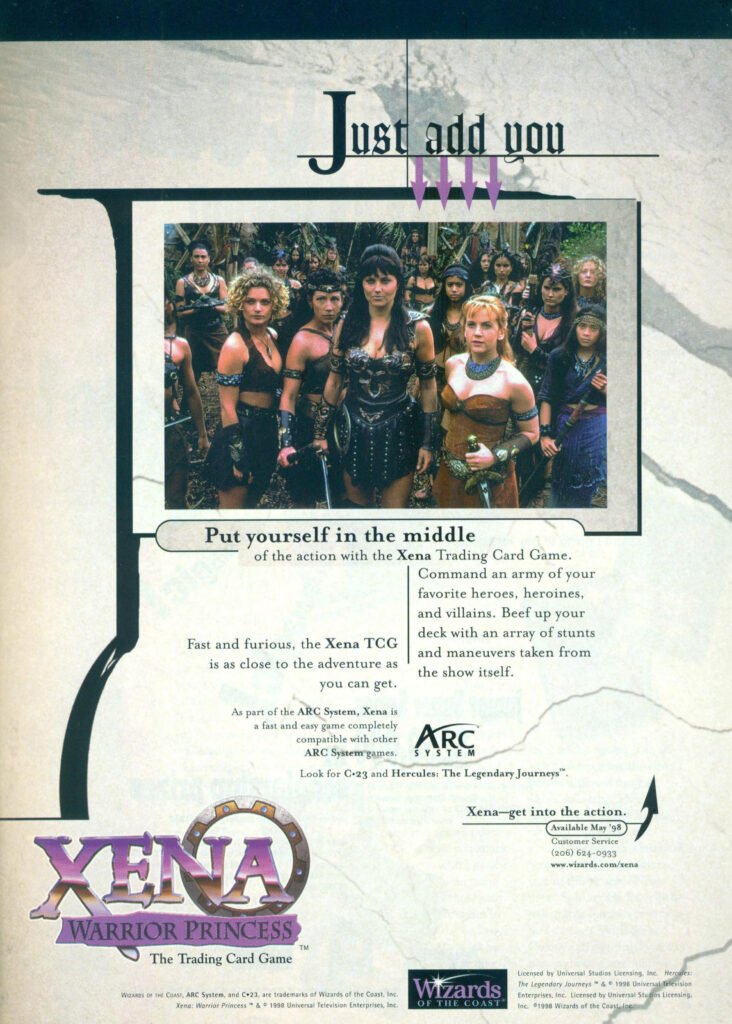
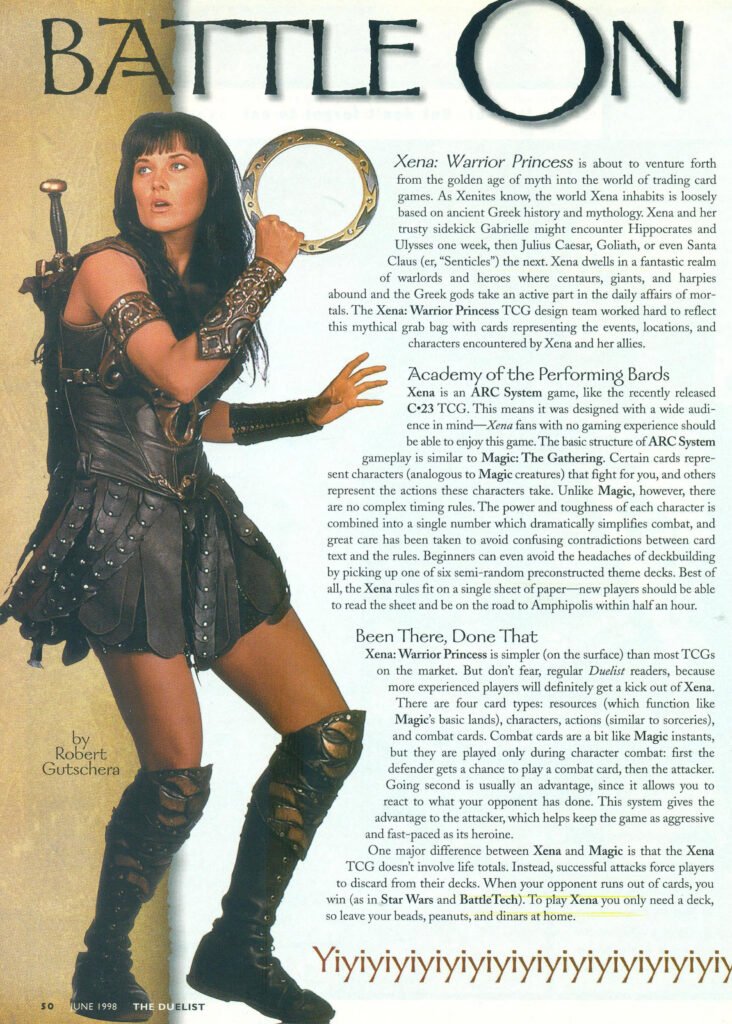
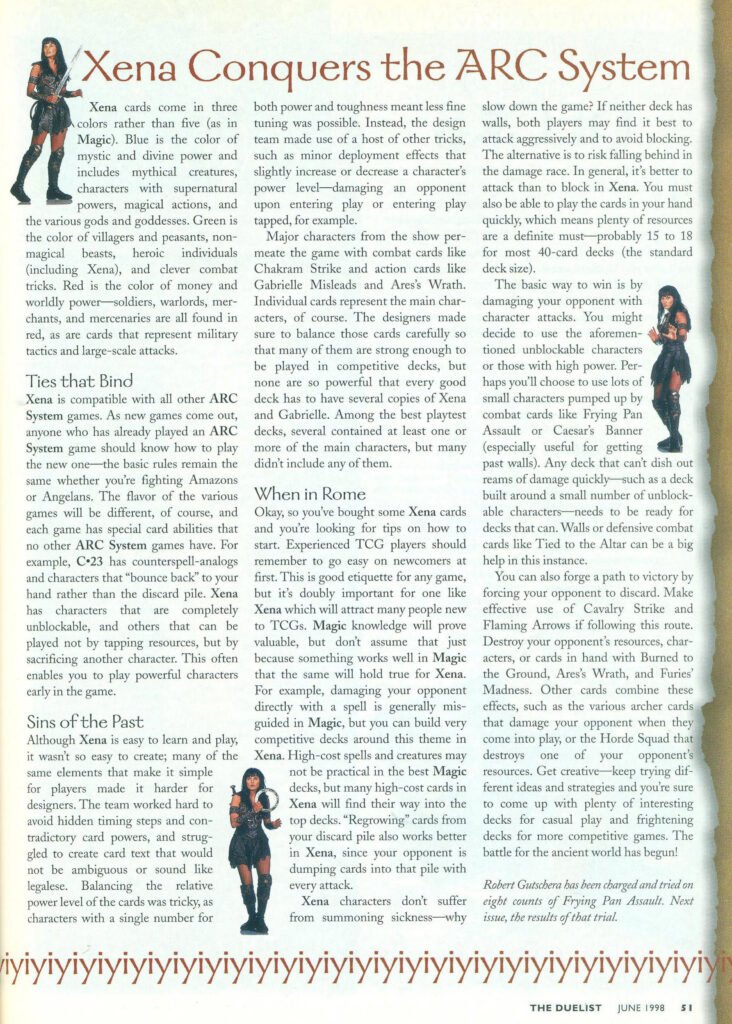
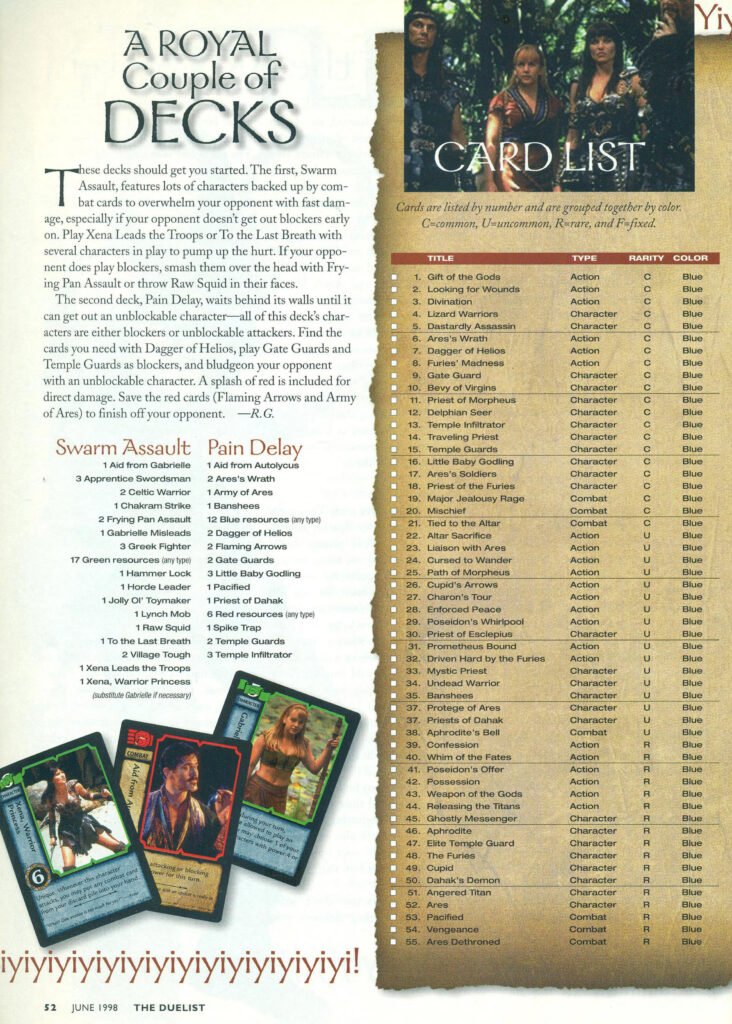
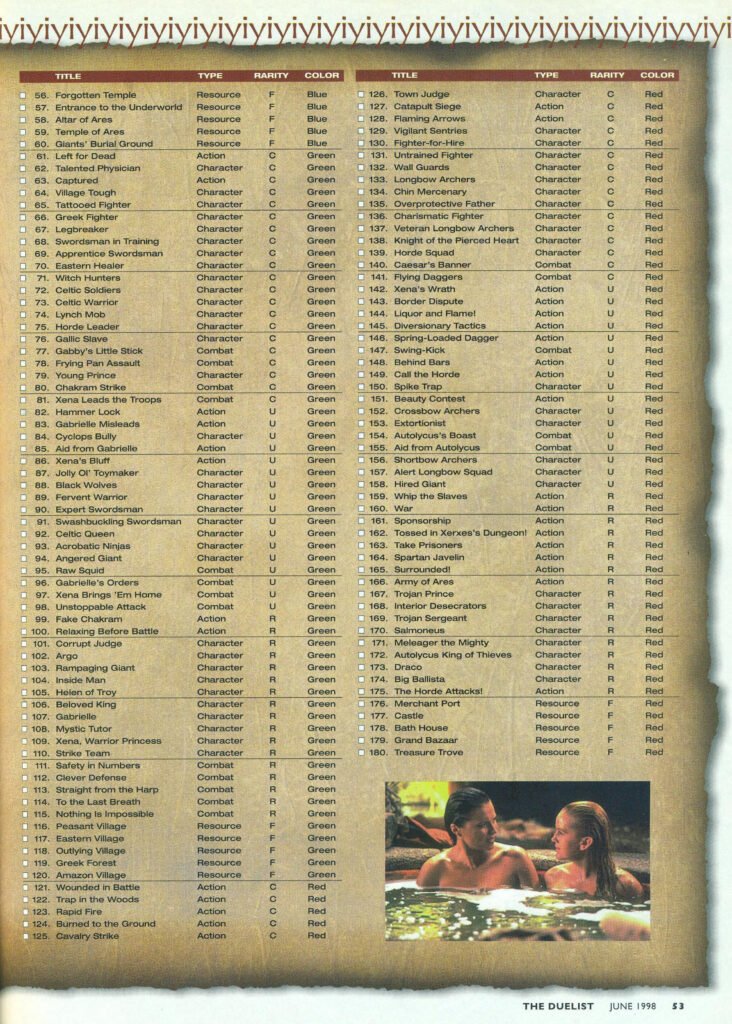
In May 1998, Wizards of the Coast expanded the ARC System with Xena: Warrior Princess, adapting the popular television series into a collectible card game. The 180-card release featured characters and situations inspired by the show.
Wizards supported the launch with organized demonstrations at comic shops, sending volunteers to teach new and inexperienced players how to play. A contemporary review by one of the game’s demo-deck testers documented these efforts, along with details of the product’s release and early distribution.
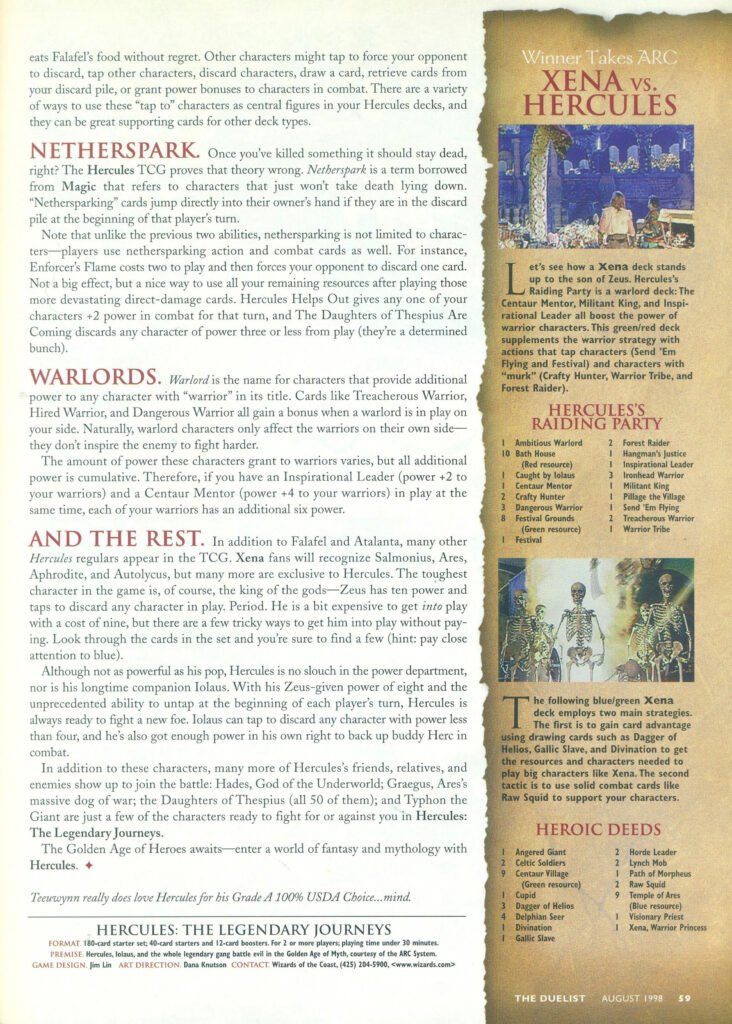
The compatibility between Xena and C-23 was already being put to use by players. One contemporary reviewer reported purchasing C-23 booster packs to supplement their Xena cards, finding that the two games worked together seamlessly. This was the ARC System’s central promise: cards from different fictional worlds could share the same game rather than being confined to separate, incompatible products.
With Hercules also in development, Wizards was positioning the ARC System as a shared platform that could accommodate multiple properties while retaining their individual identities.
Hercules: The Legendary Journeys
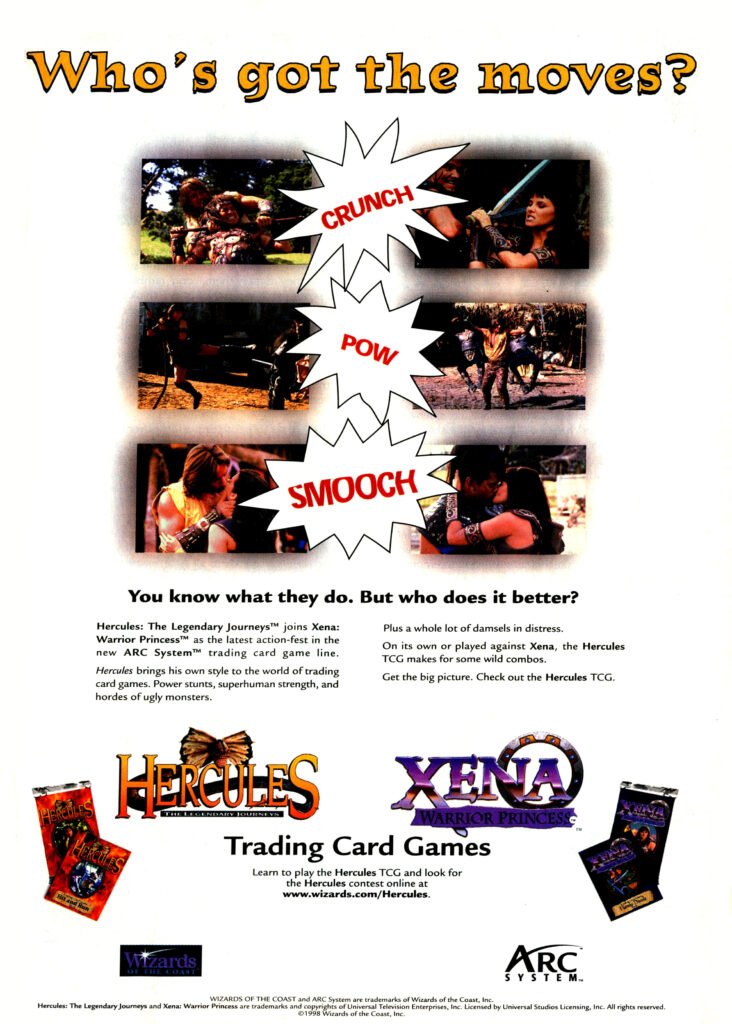
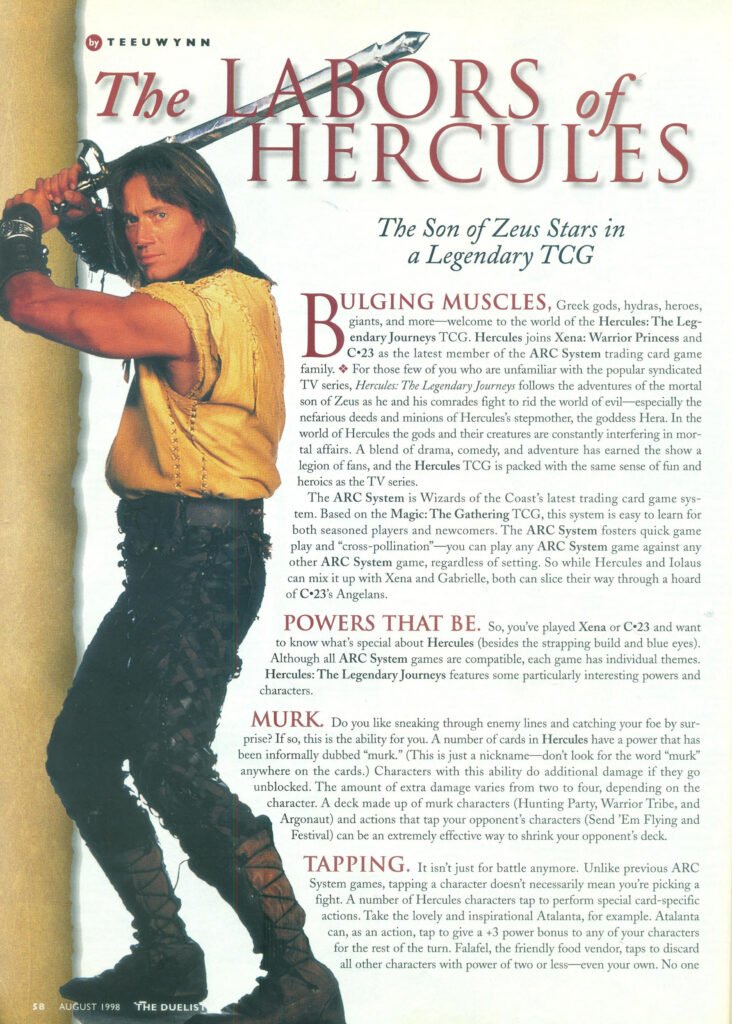
The ARC System expanded again during the summer of 1998 with Hercules: The Legendary Journeys. Based on the television series that shared its fictional universe with Xena, Hercules became the third major release using the system.
Like Xena, the Hercules game featured a 180-card collection distributed through 40-card starter decks and 12-card booster packs. Its characters and abilities drew from the television series while remaining compatible with the existing C-23 and Xena cards.
By the middle of 1998, the ARC System had grown from a single original science-fiction property into a shared gaming platform supporting three distinct card collections. The releases demonstrated Wizards of the Coast’s original goal of creating a flexible system that could accommodate multiple entertainment properties, allowing players to combine characters from otherwise unrelated fictional worlds.
C-23: Uprising — The Unreleased Expansion
While Wizards of the Coast continued expanding the ARC System into licensed television properties, plans were also underway to revisit its original game. A follow-up card series titled C-23: Uprising was scheduled for release in August 1998, continuing the storyline established by the comic and original card collection.
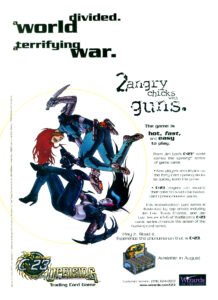
A full-page advertisement in the August 1998 issue of The Duelist promoted Uprising as a limited-edition card series, with 40-card starter decks and 12-card booster packs planned for release. The advertisement showcased artwork by Dave Johnson and promised card artwork by Jim Lee, Travis Charest, Jae Lee, and other artists, indicating that the expansion would continue featuring work by prominent comic book illustrators.
The advertisement also connected Uprising directly to issues #3–6 of WildStorm’s C-23 comic series, identifying those issues as chronicling the events of the new storyline. This followed the original plan for the comic and card game to develop together, with the ongoing comic providing a narrative foundation for subsequent card releases.
Despite being advertised as an August 1998 release, C-23: Uprising never reached the commercial market. The surviving promotional material establishes that Wizards had announced the expansion, its intended retail formats, and its connection to the comic series, but does not confirm how far the physical product progressed through development or manufacturing.
Whether prototype cards, completed artwork, packaging samples, or other production materials were created remains unknown. The circumstances surrounding the cancellation have also never been conclusively documented.
Xena: Battle Cry
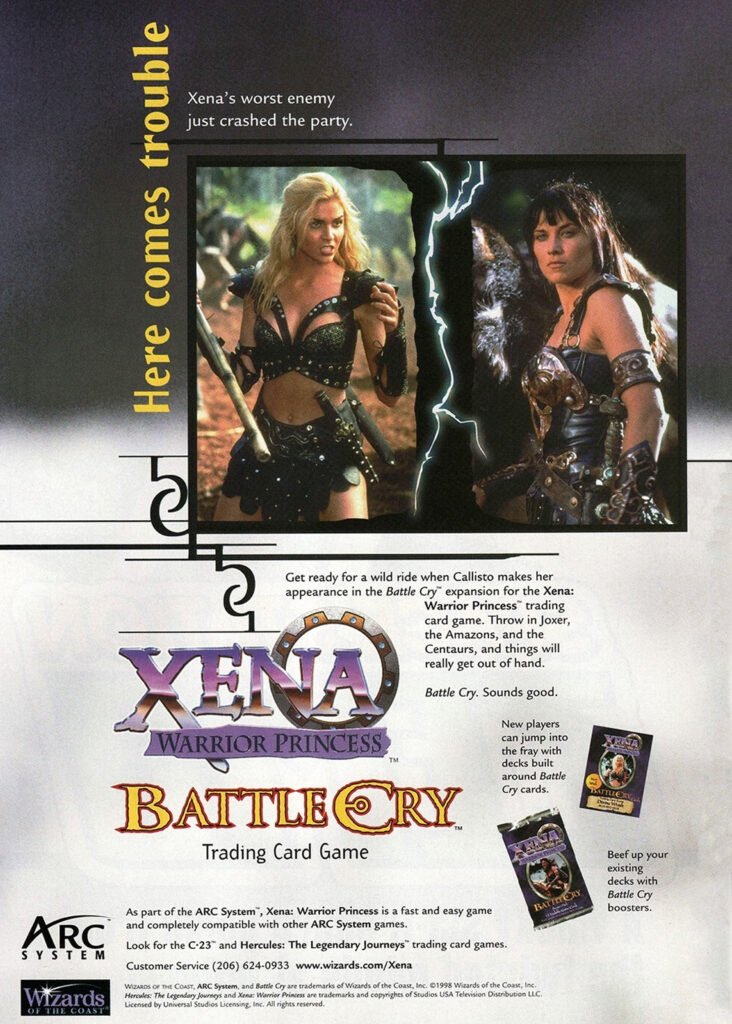
Although Uprising never reached the market, the ARC System continued with Xena: Battle Cry, an expansion to the original Xena card game released later in 1998.
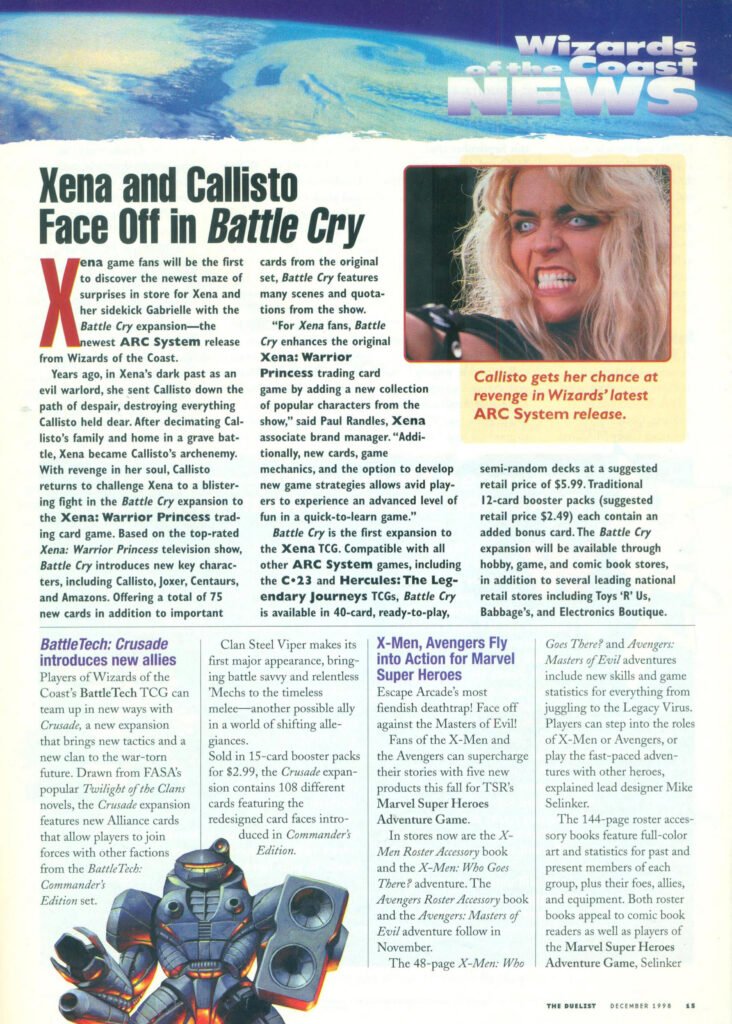
Battle Cry introduced 75 additional cards, expanding the options available to players while maintaining compatibility with the existing ARC System releases. The expansion was distributed in 13-card booster packs, a departure from the 12-card format used by the earlier games.
Contemporary reporting suggests that the additional card was connected to a problem with the original Xena starter decks. Some decks had reportedly contained rare cards that did not match their intended themes, and Wizards of the Coast planned to compensate players through the later expansion.
Battle Cry became the final known commercially released addition to the ARC System. Despite the ambitious concept of a shared gaming platform capable of supporting multiple fictional universes, no further ARC System card sets followed.
The End Of The ARC System
The ARC System’s commercial life lasted less than a year, with three original games and one released expansion appearing during 1998. Although the precise reasons for its discontinuation have never been publicly established, several developments during the same period may help explain why the product line came to an end.
Sales across the ARC System games may not have met Wizards of the Coast’s expectations, particularly in an increasingly competitive collectible card game market. At the same time, DC Comics announced its acquisition of WildStorm in late 1998, potentially complicating the future of C-23 as a property developed through a partnership between the two companies.
Wizards of the Coast was also preparing for the American launch of the Pokémon Trading Card Game in January 1999. Pokémon would quickly become an enormous commercial success, placing new demands on the company’s manufacturing, distribution, and promotional resources. With a major new product entering the market, continuing a smaller game system such as ARC may have become less attractive.
Whether any of these factors directly influenced the decision remains unknown. By the end of 1998, the ARC System had effectively disappeared, leaving behind a brief collection of interconnected games and the unreleased C-23: Uprising.
The Search For C-23: Uprising
More than two decades after its planned release, C-23: Uprising remains one of the unanswered questions surrounding WildStorm’s involvement in collectible card games. Contemporary advertisements confirm that the expansion was publicly announced, but no commercially released cards or packaging have been documented.
World of WildStorm is interested in learning more about the development and cancellation of Uprising, particularly whether any physical materials survived. These might include prototype cards, uncut sheets, original artwork, printer proofs, packaging mockups, promotional items, or internal production documents.
Former WildStorm and Wizards of the Coast employees, artists, designers, playtesters, distributors, and collectors who have firsthand information about the project are encouraged to get in touch. Even small details about the expansion’s development or planned release could help document a largely forgotten chapter of WildStorm’s history.